
Build a Preschool Camp Week Around Play, Movement, and Discovery
A child can investigate ice without holding it, learn about worms without touching one, join music without drumming and contribute to art without hands in paint.
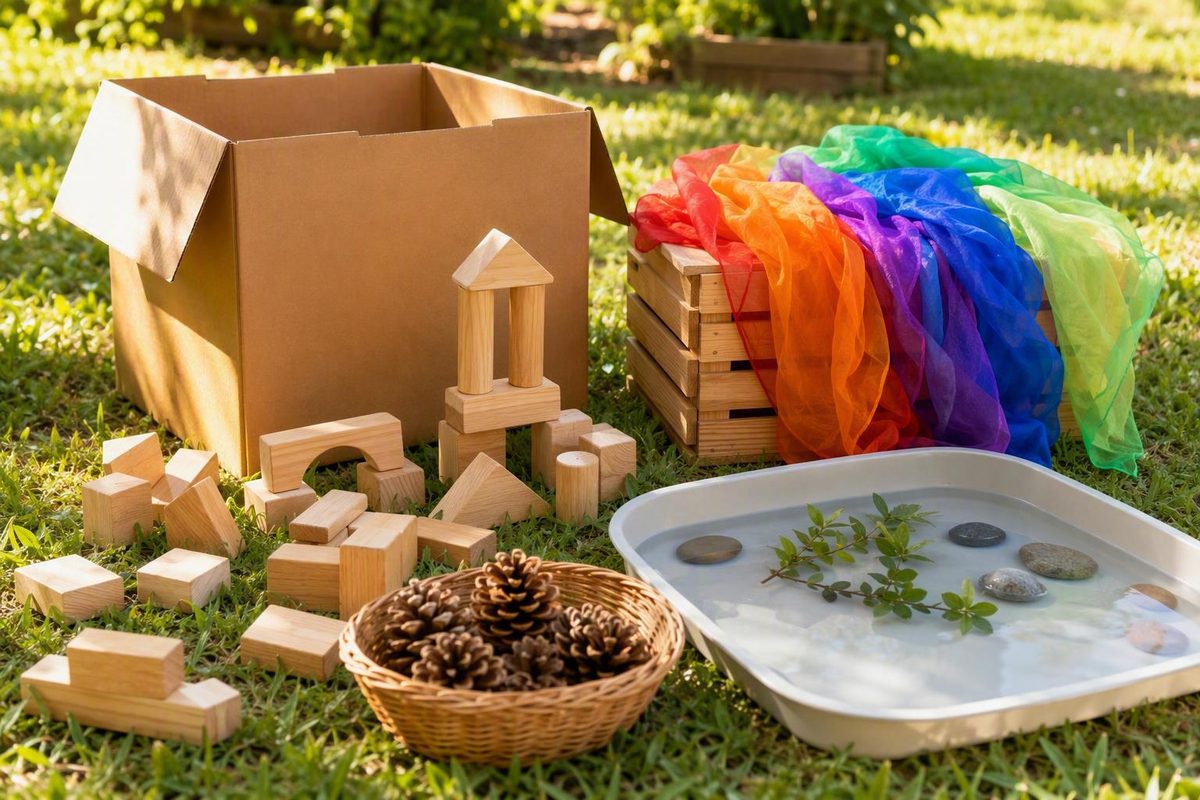
The best summer camp activities for preschoolers do not need expensive equipment or elaborate themes. A cardboard box can become a tunnel, puppet theater, animal den, campsite, ramp, or pretend shop. Add paper, tape, blocks, washable art materials, scarves, water, and a few carefully selected natural objects, and you have the foundation for a flexible week of play.
This guide is designed for adults planning activities for children ages three to five in preschool classrooms, childcare programs, day camps, or at home. Preschool camp sources commonly feature hands-on nature exploration, art, stories, music, movement, sensory experiences, and imaginative play as core activity categories.
Age alone does not establish readiness for a particular activity. Consider each child’s abilities, interests, communication, health needs, mobility, sensory preferences, and comfort. Simplify the setup, offer more than one way to participate, and complete a site-specific review before children begin.
The 30 ideas below are invitations to move, create, build, investigate, tell stories, and pretend. They are not guaranteed ways to improve intelligence, attention, confidence, academic performance, or any other long-term outcome.
How to choose activities that fit preschool campers
A useful preschool camp activity gives children something concrete to do: move, pour, look, listen, paint, sort, build, pretend, tell, test, or care for. Adults prepare the environment and safe material choices; children decide how to enter the play and what to do with those choices.
Look for activities with:
- A clear invitation: “Can you build a home for this animal?” is easier to enter than a long explanation.
- Simple directions: Introduce one or two actions, demonstrate them, and add another step only when it is useful.
- Brief, repeatable rounds: Children can toss one beanbag, contribute one story idea, or cross one movement station without waiting through a long game.
- Flexible participation: A child might touch, point, watch, describe, use a tool, dictate an idea, or work beside a peer.
- Open-ended choices: Adults select the available materials; children choose colors, sounds, arrangements, routes, characters, or structures.
- Cooperative goals: Finish together, contribute to a shared structure, or help a partner instead of eliminating players.
- An easy exit and return: Children can pause and rejoin without disrupting the activity.
Treat general camp lists cautiously. They may recommend races, water balloons, nighttime games, small-bead crafts, advanced sports, open-water activities, or construction tools. Some lists describe children ages five to seven as “younger campers,” so their activities still require substantial modification before use with three- to five-year-olds.
Avoid planning from a rigid age chart. One three-year-old may enjoy group songs but avoid wet textures. Another may spend a long time building alone and need help with transitions. A five-year-old may understand a multi-step game while requiring support with noise, balance, communication, toileting, or separation.
Choose activities for the children who will actually attend. A camp activity is a good fit when its materials, instructions, physical demands, environment, and participation choices can be adapted to the group—not simply because it appears on a preschool list.
At-a-glance activity picker: 30 ideas by setting and style
The durations below are suggested planning ranges, not evidence-based standards. Adjust them for your space, staffing, routines, group, and applicable requirements.
Risk-review flags
- W: Water or ice
- F: Food or allergy considerations
- S: Small-part or mouthing considerations
- I: Internet or media use
- M: Vigorous or whole-body movement
- A: Adapt and assess; derived from a broader-age camp idea or requires substantial preschool modification
| # | Activity | Category | Setting | Mess | Pace | Format | Focus | Suggested planning range | Review |
|---|---|---|---|---|---|---|---|---|---|
| 1 | Picture-card nature hunt | Nature | Outdoor | Low | Active | Small group | Observation | 15–25 min | Local route |
| 2 | Plant observation walk | Nature | Outdoor | Low | Quiet | Small group | Description | 10–20 min | Local plants |
| 3 | Leaf rubbings | Nature/art | Either | Low | Quiet | Individual | Art and texture | 15–25 min | Known leaves |
| 4 | Fast-sprouting seed garden | Gardening | Either | Messy | Quiet | Small group | Care and observation | 15–25 min setup; revisit | S |
| 5 | Recycled-paper seed balls | Gardening/art | Either | Messy | Quiet | Small group | Making and planting | 20–35 min | S |
| 6 | Worm observation | Nature | Either | Messy | Quiet | Small group | Animal observation | 10–20 min | No-touch option |
| 7 | Texture comparison box | Sensory | Indoor | Low | Quiet | Individual | Describing textures | 10–15 min | S |
| 8 | Frozen-ocean toy rescue | Water/ice | Either | Messy | Quiet | Small group | Melting and testing | 15–30 min | W |
| 9 | Container pouring | Water | Either | Messy | Active | Individual | Pouring and comparing | 10–20 min | W |
| 10 | Sponge transfer | Water | Either | Messy | Active | Small group | Squeezing and transferring | 10–20 min | W, A |
| 11 | Ocean discovery scene | Sensory/story | Either | Low | Quiet | Small group | Sorting and pretend play | 15–25 min | S |
| 12 | Coffee-filter water art | Art | Either | Messy | Quiet | Individual | Color movement | 20–30 min | Water drops |
| 13 | Cardboard-tube sound play | Art/music | Indoor | Low | Active | Whole group | Sound contrasts | 20–30 min | Noise |
| 14 | Stone or paper painting | Art | Either | Messy | Quiet | Individual | Open-ended art | 20–30 min | Large pieces |
| 15 | Paper-bag puppets | Art/story | Indoor | Low | Quiet | Small group | Character creation | 20–30 min | Large pieces |
| 16 | Toy-car roads and ramps | Building | Either | Low | Active | Small group | Building and testing | 20–40 min | A |
| 17 | Block-built animal habitats | Building/story | Indoor | Low | Quiet | Small group | Building and pretend play | 20–40 min | Media optional |
| 18 | Clue-based mystery box | Language/sensory | Indoor | Low | Quiet | Small group | Questions and inference | 10–15 min | S |
| 19 | Dancing and action songs | Music/movement | Either | Low | Active | Whole group | Rhythm and movement | 5–15 min | M |
| 20 | Pot-and-spoon rhythms | Music | Either | Low | Active | Whole group | Pattern copying | 10–15 min | Noise |
| 21 | Puppet problem stories | Story/drama | Indoor | Low | Quiet | Small group | Storytelling | 10–20 min | — |
| 22 | Animal charades | Movement/drama | Either | Low | Active | Whole group | Gesture and guessing | 10–15 min | A |
| 23 | Collaborative story circle | Story | Indoor | Low | Quiet | Small group | Shared storytelling | 10–20 min | — |
| 24 | Shared-target beanbag toss | Movement | Either | Low | Active | Small group | Aiming and turn-taking | 10–15 min | M |
| 25 | Scarf tennis | Movement | Either | Low | Active | Small group | Tracking and tapping | 10–15 min | M, A |
| 26 | Cooperative obstacle course | Movement | Either | Low | Active | Small group | Route following | 15–25 min | M, A |
| 27 | Indoor campsite | Dramatic play | Indoor | Low | Mixed | Whole group | Sustained pretend play | 30–60 min choice area | Setup review |
| 28 | Pretend lemonade stand | Dramatic play | Either | Low | Mixed | Small group | Roles and mark-making | 20–40 min | F if food added |
| 29 | Animal inquiry wall | Inquiry/story | Indoor | Low | Quiet | Small group | Questions and observation | 15–30 min | I if online |
| 30 | Paper fruit café | Dramatic play/art | Indoor | Low | Quiet | Small group | Pretend food play | 20–30 min | No-food option |
Many supplies can support several activities: cardboard boxes, paper tubes, recycled paper, painter’s tape, large blocks, washable markers and paint, coffee filters, paper bags, clothespins where suitable, craft sticks, scarves, toy animals, toy cars, sponges, shallow containers, and picture cards. General camp-planning guidance also recommends collecting reusable cardboard and craft materials in advance, although every donated item still needs a local suitability check (SignUpGenius’s general camp activity guide).
Nature, water, and sensory explorations
Nature and water activities can give camp a distinctly summery feel, but outdoor settings are not automatically appropriate for every group. Walk the route first, note the terrain and current conditions, identify what children must avoid, and decide whether the activity involves looking, photographing, or collecting. One general camp source recommends using plants and birds local to the camp for a nature hunt and teaching children to avoid poisonous plants before beginning (CampMinder’s camp activity list).
Picture-card nature hunt
Materials: Picture cards showing a few locally relevant colors, shapes, plants, or animals; clipboards or firm cardboard; crayons; optional program-approved camera.
Setup: Walk the route without children. Remove inaccessible stops and replace specific collecting requests with prompts such as “find something yellow” or “spot a rough-looking tree trunk.”
Steps:
- Show two or three cards.
- Model looking without touching.
- Travel together along a defined route.
- Let children point, match a card, make a mark, or dictate an observation.
- Regroup and compare what everyone noticed.
Lower-contact option: Hold a card, point from the path, dictate to an adult, or work with a peer.
Conversation prompt: “What helped you notice it—its color, shape, movement, or sound?”
Indoor version: Hide colored paper shapes or nature photographs around the room.
Plant observation walk
Materials: Cardboard viewing frames, drawing paper, crayons, and optional magnifiers suitable for the group.
Setup: Choose a short route with known plants. Establish whether children will look, draw, or photograph rather than pick.
Steps:
- Frame one plant through the cardboard opening.
- Notice its color, height, leaf shape, or location.
- Draw one visible detail or dictate a description.
- Compare two plants without requiring children to identify their species.
- Revisit later if interest continues.
Lower-contact option: Observe from a distance or work from an adult-taken photograph.
Conversation prompt: “What looks the same or different?”
Indoor version: Sort artificial leaves, plant photographs, or paper flowers by visible features.
Leaf rubbings
Materials: Known leaves or artificial leaves, recycled paper, peeled or chunky crayons, and tape.
Setup: Adults select and inspect the leaves. Tape a leaf beneath the paper if movement makes rubbing difficult.
Steps:
- Place paper over a leaf.
- Rub the side of a crayon across the paper.
- Try a different color or leaf position.
- Combine finished rubbings into a group forest.
Lower-contact option: An adult positions the leaf, or the child uses an artificial texture plate.
Conversation prompt: “Which lines appeared first?”
Indoor version: Use artificial leaves, textured cardboard, or prepared rubbing plates.
Fast-sprouting seed garden
Materials: Suitable fast-sprouting seeds, growing medium, containers, trays, labels, scoops, and water. Green beans are one fast-growing option suggested in a general camp gardening activity (CampMinder’s gardening idea).
Setup: Choose materials appropriate to the program and determine where the containers can remain for observation. Treat any seed, soil, mouthing, allergy, or sanitation questions as matters for the program’s own procedures rather than assuming the activity is automatically suitable.
Steps:
- Add growing medium with a scoop.
- Place seeds according to the directions for the selected plant.
- Add water.
- Create a name or picture label.
- Revisit the container and draw visible changes.
Lower-contact option: Point to the seed location, direct an adult, use a larger scoop, or design the label.
Conversation prompt: “What changed since we last looked?”
Indoor version: Use appropriate indoor containers or sequence picture cards showing the planting process.
Recycled-paper seed balls
Materials: Torn recycled paper, water, adult-prepared paper pulp, suitable seeds, bowls, and trays.
Setup: Adults prepare the pulp away from children if equipment is required. Decide in advance whether the seeds and pulp are appropriate for the children and setting.
Steps:
- Squeeze or press prepared pulp.
- Add an adult-distributed amount of seed.
- Form loose clumps or press the mixture into large molds.
- Dry the pieces.
- Send them home with planting information appropriate to the selected seed.
Lower-contact option: Use a spoon or scoop, choose a seed by pointing, or make the label without touching pulp.
Conversation prompt: “What might this need after it is planted?”
Indoor version: Make seed-free paper forms for a pretend garden or collage a planting sequence.
Worm observation
Materials: Worm books or photographs, an adult-prepared observation habitat, an optional magnifier, and drawing supplies.
Setup: Decide how the worms will be housed and observed, how contact will be limited, and what program procedures apply afterward. An educator’s preschool account paired worm books and discussion with magnifier observation and allowed hesitant children to participate through peers (Edutopia’s preschool summer activity account).
Steps:
- Begin with a picture or short story.
- Observe how the worms look and move.
- Invite children to draw, point, or describe.
- End the observation before handling becomes the focus.
Lower-contact option: Watch from another place at the table, view a photograph, dictate an observation, or ask a peer to position the magnifier.
Conversation prompt: “Where do you think a worm would choose to hide?”
Indoor version: Build an underground habitat for a toy worm with blocks and paper.
Texture comparison box
Materials: A shallow box or tray and a few large objects such as a sponge, scarf, wooden spoon, textured ball, or inspected pinecone.
Setup: Choose pieces that suit the group and can be presented individually rather than buried in a filler material.
Steps:
- Display two or three objects.
- Invite children to touch, look, or use a tool.
- Compare qualities such as soft, firm, rough, smooth, bendy, or stiff.
- Sort the objects in a child-chosen way.
Lower-contact option: Use picture choices, watch another child demonstrate, or describe what is visible.
Conversation prompt: “How are these two objects different?”
Indoor version: The activity is already designed as a compact indoor station.
Frozen-ocean toy rescue
Materials: Large sea-animal toys frozen in shallow containers, a basin, small cups or spoons, water, and towels.
Setup: Place the basin where the group can gather without blocking normal movement. This is tabletop or tub exploration, not swimming or open-water play.
Steps:
- Place the ice block in the basin.
- Look for visible toys and predict what might free them.
- Add small amounts of water.
- Observe melting and cracking.
- Pause to compare which areas changed.
Lower-contact option: Direct an adult where to pour, use a long-handled spoon, or observe and narrate.
Conversation prompt: “Where is the ice changing fastest?”
Indoor version: Use one basin or place a single ice cube in a sealed clear container for observation.
Container pouring
Materials: A shallow basin, a small amount of water, wide plastic containers, optional funnels, and towels.
Setup: Keep the station distinct from drinking water and choose a location where the program can manage wet surfaces.
Steps:
- Demonstrate filling to a marked line.
- Pour between two wide containers.
- Compare the water level in different shapes.
- Empty and restart if children remain interested.
Lower-contact option: Use empty containers, a dry scoop, or direct a partner.
Conversation prompt: “Which container looks as if it holds more? How could we compare?”
Indoor version: Place the basin in the program’s designated water-play area or use dry scarves for transfer play.
Sponge transfer
Materials: Two shallow containers, large sponges, a small amount of water, and towels.
Setup: Arrange the containers close together. Present the activity as shared transfer play rather than a race.
Steps:
- Dip a sponge into the first container.
- Carry it to the second.
- Squeeze out the water.
- Work toward a shared fill line.
- Repeat or change sponge size.
Lower-contact option: Use a dry sponge, a scoop, or a partner who follows the child’s directions.
Conversation prompt: “What happened when you squeezed slowly?”
Indoor version: Transfer dry sponges, cloths, or scarves between baskets.
Ocean discovery scene
Materials: Large inspected shells or sturdy replicas, toy sea animals, blue cloth, blocks, photographs, books, and magnifiers.
Setup: Offer a small number of large pieces instead of a deep bin filled with loose material.
Steps:
- Look at the available objects.
- Sort by visible features or arrange an ocean scene.
- Add blocks or cloth to create places for the animals.
- Draw or dictate a label for the scene.
Lower-contact option: Arrange photographs, point to matching pictures, or observe through a magnifier.
Conversation prompt: “What kind of place would this animal need?”
Indoor version: Use paper shells, animal pictures, blocks, and a blue scarf.
Children need close supervision around water regardless of their perceived swimming ability. Tabletop basins are different from pools, streams, swimming, boating, fishing, and other open-water settings; those environments require procedures appropriate to the actual activity (Prisma Health’s pediatric camp-safety guidance).
Process art, building, and simple STEM stations
Process-focused stations begin with selected materials and an invitation, not a model every child must copy. Adults can demonstrate how a material works while leaving decisions about color, arrangement, sound, route, character, or structure to the child.
Counting, descriptive language, drawing, and storytelling can be added when they support the play. They do not need to interrupt a child who is already concentrating on building or creating.
Coffee-filter water art
Materials: White coffee filters or absorbent paper, washable markers, droppers or teaspoons, water, trays, and a drying space.
Steps:
- Place a filter on a tray.
- Add marker dots, lines, or shapes.
- Apply a few controlled drops of water.
- Watch the colors move.
- Dry the work flat and later hang, fold, or collage it.
Coffee filters colored with markers and dripped with water appear in a general camp craft outline. If filters or clothespins are unavailable, use absorbent recycled paper and attach the dried work with tape. Avoid presenting one finished shape as the required result.
Cardboard-tube sound play
Materials: Paper tubes, large paper shapes, washable markers, tape, scarves, sturdy containers, and optional wooden spoons.
Steps:
- Inspect the tubes and prepare them for use.
- Decorate with markers and large paper pieces.
- Hum, speak, or sing through an empty tube.
- Use tubes as pretend microphones.
- Compare loud, soft, long, and short sounds.
Empty tubes are sufficient. Loose rice, beans, beads, and cords are unnecessary. Offer a quiet listening role or scarf movement for children who do not want to make sound.
Stone or paper painting
Materials: Large smooth stones selected by an adult or heavy paper shapes, washable paint, chunky brushes, and trays.
Steps:
- Offer a small palette and several tools.
- Paint patterns, creatures, maps, faces, or abstract marks.
- Dry the work on labeled trays.
- Use finished pieces in stories or pretend habitats.
Heavy paper “stones” are a useful alternative when the program does not want to use natural objects.
Paper-bag puppets
Materials: Paper lunch bags, large precut paper shapes, glue sticks, markers, and paper strips.
Steps:
- Show how a hand can move the bag.
- Invite children to create any character.
- Ask whether the puppet has a name, movement, or sound.
- Pair puppets for a short child-led scene.
- Save them for later storytelling.
Use paper pieces rather than beads, buttons, gemstones, or other small decorations. A child who does not want to speak can move the puppet while another person narrates.
Toy-car roads, tunnels, and low ramps
Materials: Painter’s tape, cardboard, recycled paper, low boxes, blocks, and toy cars suitable for the group.
Steps:
- Tape a road to the floor or a large cardboard sheet.
- Add folded-paper tunnels.
- Build a low ramp with blocks and cardboard.
- Test a car.
- Change one route, height, or support and test again.
This is an opportunity to build and test ideas, not a race or proof of a measured STEM outcome. A preschool teacher described children extending a similar setup made from tape, paper tunnels, toy cars, and improvised ramps when they remained interested. The account illustrates responsive planning rather than a result every group will reproduce.
Block-built animal habitats
Materials: Large blocks, toy animals, paper or cloth, books, approved still images, and drawing supplies.
Steps:
- Look at one book page or approved image.
- Ask what the animal might need in its space.
- Build with blocks and other large parts.
- Move toy animals through the habitat.
- Add a map, sign, or story if children choose.
An animal camera can be used only if it fits the program’s media procedures. A teacher account describes family-approved animal-camera viewing followed by habitat construction, but a book or still image can provide the same starting prompt.
Clue-based mystery box
This activity differs from the texture station because children do not need to touch the concealed object. The focus is on listening to clues, asking questions, and revising a guess.
Materials: An opaque box or bag, several large familiar objects, and optional picture choices.
Steps:
- Conceal one object.
- Offer a clue about its sound, use, shape, or texture.
- Invite a question, gesture, or picture selection.
- Add another clue.
- Reveal the object and discuss which clues fit.
Children can pass without guessing. Avoid scoring correct answers.
Low-height obstacle path
Materials: Floor tape, flat spots, low foam markers, a cardboard tunnel, a beanbag, and clear start and finish areas.
Steps:
- Follow a tape line.
- Step over or around a low marker.
- Crawl through a cardboard tunnel or use the bypass.
- Carry a beanbag to a basket.
- Finish with a partner.
This is a proposed movement setup, not a safety certification. The adult responsible for the space must decide which actions and materials fit the participating children.
Across these stations, larger paper pieces, scarves, blocks, tape, and craft sticks can often replace beads, buttons, gemstones, cords, balloons, or tool-based construction. The label “craft” or “STEM” does not establish that a material is appropriate for a particular group.
Music, movement, stories, and cooperative camp games
Energetic play is easier to adapt when rules can be demonstrated quickly and nobody has to sit out after a mistake. Convert races into untimed stations, scoring into shared targets, and performances into optional participation.
Dancing and action songs
Choose familiar songs with repeatable actions such as reaching, swaying, clapping, marching, freezing, or moving like an animal.
Offer:
- A seated version
- Picture cards for the next action
- A choice between two gestures
- A scarf or instrument instead of whole-body movement
- An observe-first place at the edge of the group
Children do not need to copy every movement or perform alone.
Pot-and-spoon rhythm play
Materials: Sturdy containers or pots, suitable wooden spoons, and quieter tapping surfaces.
Steps:
- Establish a ready position with tools resting.
- Tap a short pattern.
- Invite children to copy it or answer with another pattern.
- Explore loud and soft or start and stop.
- End with tools resting together.
Pots and spoons appear as accessible drum-circle materials in a preschool camp list. Adults should still decide whether the sound level and striking actions fit the group.
Puppet problem stories
Begin with a simple situation: “The bear cannot find a shady place,” or “The rabbit has lost a backpack.”
Children can:
- Choose a puppet
- Move a character
- Suggest what happens next
- Make a sound
- Point to a picture
- Watch while someone else narrates
Keep the story short enough that children are not waiting through many turns.
Animal charades
Use picture cards showing familiar animals.
- A child selects or points to a card.
- The child, an adult, or a pair makes one movement or sound.
- The group chooses from two or three picture answers.
- Everyone can try the movement together.
There is no winner. A child may hold the picture while somebody else acts.
Collaborative story circle
Invite each child to contribute in one of several ways:
- One word or sentence
- A gesture
- A sound
- A picture card
- A puppet action
- A pass
An adult can repeat and connect the contributions without correcting the plot. Stop while the group is still able to follow the shared story.
Shared-target beanbag toss
Place baskets or floor hoops at several reachable positions. Children may toss, roll, drop, or carry a beanbag to the target.
Instead of keeping score, invite the group to move all the beanbags into the “camp basket.” Use short rounds so children can change position or rejoin easily.
Scarf tennis
Balloon tennis appears in general rainy-day camp lists, but scarves or loosely crumpled paper balls provide an alternative that does not make balloons the default material.
Materials: Scarves or paper balls, optional cardboard paddles, and a floor-tape line.
Play:
- Tap a scarf upward with a hand or paddle.
- Send it across a floor line.
- Work with a partner to keep it moving.
- Retrieve it together and restart without penalties.
A seated player can tap over a low line or slide a paper ball across a table.
Cooperative obstacle course
Create a short sequence:
- Follow a tape line.
- Step over or around a low marker.
- Crawl through a cardboard tunnel or take the bypass.
- Carry a beanbag.
- Place it in a shared basket.
- Wait in the finish area.
- End together.
Use untimed rounds and space participants according to the room and group. Preschool obstacle-course suggestions emphasize personalizing the route to the children’s needs and abilities rather than assuming that a child-sized course fits everyone (Twinkl’s preschool summer-camp ideas).
Tug of war, trampoline activities, Gaga ball, nighttime games, water-balloon games, vigorous races, and advanced sports are not necessary default choices. This guide uses simpler substitutions with fewer equipment and rule demands.
Pretend camp, food projects, and longer child-led investigations
Some activities gain depth because they remain available over several days. Sustained play does not require a complicated theme. It requires reusable materials, space for children’s questions, and an opportunity to revisit an idea.
Build an indoor campsite
Use a tent or a simple adult-prepared blanket shelter that fits the room and the program’s normal setup procedures. Add:
- A paper-and-cardboard pretend campfire
- Books about animals, weather, or camping
- Stuffed animals
- Backpacks and rolled blankets
- Camp songs
- Paper fish and cord-free pretend fishing props
- Clipboards for campsite maps
- Blocks for animal shelters
An educator’s classroom camping area included a tent, pretend campfire, fishing play, books, songs, blankets, backpacks, and stuffed animals (Edutopia’s indoor camping example).
Keep real flame, cooking equipment, and cord-based fishing lines out of the pretend-play setup. Review the arrangement under the same room-use procedures applied to other large dramatic-play structures.
Create a pretend lemonade stand
Keep dramatic play separate from food preparation unless the program is prepared to run a food activity under its own requirements.
For a no-food stand, provide:
- Yellow paper circles
- Empty prop cups
- Order pads
- Paper tokens
- Signs
- Aprons
- An empty pitcher
Children can take orders, make marks, count cups, deliver pretend drinks, and redesign the stand. Colored-water mixing may be offered as a separate non-tasting water activity if that presentation can be managed clearly within the program.
A teacher account describes a weeklong lemonade project involving lemons, mixing, a stand, and feedback from school staff. It is useful as inspiration for sustained play, not as a complete food-safety procedure.
If adults are considering real food preparation or tasting, first determine what the program requires for allergy and medical information, ingredient selection, hygiene, choking-risk review, cross-contact or cross-contamination controls, food handling, and supervision. A general camp-planning source specifically advises checking allergy lists before selecting cooking activities; that advice does not by itself provide a complete food protocol.
No-food alternatives include paper fruit collages, a pretend smoothie shop, reusable felt or cardboard foods, and a dramatic-play snack counter.
Continue a planting project through the week
A garden or seed-ball project gives children a reason to return:
- Day one: Plant seeds or form seed balls.
- Day two: Make labels and predict what may change.
- Day three: Observe the containers or sort plant pictures.
- Day four: Draw what is visible.
- Day five: Prepare family care notes or decide where camp plants will remain.
Do not promise that a seed will sprout during the camp week. Growth timing can vary even when a fast-sprouting variety is selected.
Move from animal observation to inquiry and habitat play
A longer investigation can unfold in stages:
- Share a book, approved still image, or brief animal-camera view.
- Record children’s questions in their own words.
- Add drawings or picture choices to an inquiry wall.
- Build habitats with blocks and toy animals.
- Add paper water, shade, sleeping spaces, or paths.
- Turn the habitat into a puppet or pretend-play setting.
- Revisit the original image and decide what to change.
The inquiry wall and habitat station have different purposes: one collects observations and questions; the other invites construction and pretend play.
Extend interest without surrendering the schedule
When children remain engaged, adults can preserve the setup or identify a specific time to return. Look for observable reasons to continue:
- Children are creating new variations.
- They are negotiating roles safely.
- They are asking related questions.
- They are returning independently.
- They are changing and retesting a structure.
An educator’s toy-car account illustrates this principle: the teacher extended the activity after children continued testing roads and ramps. That anecdote supports responsive planning, not a prediction that every group will remain interested.
End, pause, or modify the activity when required routines must occur, the space no longer works for the group, or interest has moved elsewhere.
A ready-to-adapt half-day rhythm and five-day theme plan
The following is a proposed planning structure, not an evidence-based schedule or a universal standard. Arrival procedures, meals, rest, toileting, transitions, staffing, and required programming vary among homes, classrooms, camps, and jurisdictions.
Proposed half-day rhythm
| Part of the session | Planning purpose | Examples |
|---|---|---|
| Arrival choice play | Support entry and allow individual check-ins | Blocks, books, campsite, drawing |
| Short welcome | Preview the session with words and pictures | Greeting song, visual sequence |
| Active exploration | Use available energy and suitable conditions | Nature hunt, movement stations |
| Snack and care routines | Make room for food, water, toileting, and transitions | Follow the child’s applicable plans |
| Creative or sensory choice | Offer small-group, hands-on play | Painting, water basin, building |
| Story or quieter activity | Reduce noise and movement demands | Puppets, books, observation drawing |
| Closing choice play | Revisit interests and support staggered departures | Habitats, toy roads, pretend stand |
Do not fill every transition with another adult-led task. Leave room for setup, cleanup, care routines, waiting, conversation, and unstructured choice.
Five-day theme plan
Day 1: Nature Detectives
- Primary activity: Picture-card nature hunt and leaf rubbings
- Quieter companion: Draw or dictate one outdoor observation
- Movement option: Move like an observed bird, insect, or tree
- Prompt: “What did we notice without touching?”
- Indoor or extreme-weather backup: Classroom color hunt and artificial-leaf sorting
Day 2: Water and Ice
- Primary activity: Frozen-ocean toy rescue
- Quieter companion: Ocean scene with large objects and toy animals
- Movement option: Seated or standing scarf waves
- Prompt: “What made the ice change?”
- Indoor or extreme-weather backup: One water station in the program’s designated area, plus a block-built ocean habitat
Day 3: Builders and Testers
- Primary activity: Tape roads, paper tunnels, and low toy-car ramps
- Quieter companion: Block-built animal habitats
- Movement option: Cooperative obstacle course
- Prompt: “What could we change and try again?”
- Indoor or extreme-weather backup: Reduce the obstacle route and keep the building stations
Day 4: Music and Stories
- Primary activity: Cardboard-tube sound play and rhythm copying
- Quieter companion: Paper-bag puppets
- Movement option: Action songs or animal charades
- Prompt: “What problem will our puppet solve?”
- Indoor or extreme-weather backup: Quiet tapping surfaces, seated gestures, and a collaborative story
Day 5: Indoor Camping
- Primary activity: Indoor campsite with pretend campfire, books, stuffed animals, and make-believe fishing
- Quieter companion: Campsite maps or a paper fruit café
- Movement option: Carry a pretend backpack through a low cooperative trail
- Prompt: “What should our campsite have, and why?”
- Indoor or extreme-weather backup: Use tabletop shelter models if a full-size dramatic-play structure does not fit
Reuse supplies throughout the week. Cardboard can become clipboards, ramps, tunnels, paddles, signs, and pretend logs. Paper becomes observation sheets, puppet pieces, roads, fruit, labels, and story props. Blocks move between habitats, ramps, and campsite borders. Scarves become waves, movement tools, picnic blankets, and scenery.
A flexible mixed-age home-camp program uses STEM, nature, games, art, water and ice, and camping themes in any order and allows families to select only the weeks that fit (Busy Toddler’s flexible summer-camp structure). Apply the same principle here: rearrange days, repeat a favorite, or omit activities that do not fit your group.
Safety, inclusion, and readiness checks before camp begins
No article or checklist can establish that an activity is safe for a particular child, group, program, or site. The questions below are non-exhaustive planning prompts. They do not replace applicable professional guidance, individual health plans, staff training, program procedures, or jurisdiction-specific requirements.
Pre-activity review
Before children enter the activity area, ask:
- Water: What kind of water setting is this—tabletop play, a pool, or open water? Who is responsible for supervision, and what procedures apply to that setting?
- Heat and weather: Do current conditions support the planned activity? Is a shaded or indoor alternative available?
- Sun and hydration: How will the program provide drinking water, suitable clothing or shade, and follow its sunscreen procedures?
- Insects and plants: Has the outdoor location been reviewed for known local concerns and child-specific reactions?
- Terrain: Does the route contain slopes, uneven ground, traffic boundaries, or barriers that affect participation?
- Food: What allergy, medical, ingredient, hygiene, choking, storage, and supervision requirements apply?
- Asthma and medication: Which individual action plans apply, and which authorized staff members are responsible?
- Sanitation: What established program procedures apply to hands, shared materials, animals, growing media, water, and food?
- Mouthing and small parts: Are seeds, beads, buttons, gemstones, loose fillers, or broken balloon pieces unsuitable for anyone in the group?
- Tools and recyclables: Are there damaged materials, staples, splinters, sharp edges, or tools that should be removed or substituted?
- Cords and entanglement: Can strings, lanyards, necklaces, hanging fabric, or pretend fishing lines be eliminated or redesigned?
- Balloons and projectiles: Would scarves, paper balls, or beanbags be a better fit than balloons or harder flying objects?
- Movement: Does every action have a lower-demand choice or bypass? Does the available space fit the group’s movements?
- Emergency planning: Do staff know the program’s attendance, communication, first-aid, evacuation, and family-contact procedures?
Pediatric camp guidance identifies water, heat, sun exposure, insects, poisonous plants, falls, allergies, asthma, and medication as issues to address. It recommends close water supervision regardless of swimming ability, hydration and regular sunscreen reapplication outdoors, emergency action plans for children with food allergies or asthma, and access to required medication with staff aware of its location and use (Prisma Health’s camp-safety overview).
The checklist above should therefore be treated as a starting point for asking questions, not as a complete protocol. Program operators should identify and follow the childcare licensing, staffing, accessibility, food-service, medication, transportation, and emergency requirements that apply in their location.
Practical participation adaptations
These are practical options, not proven protocols:
- Show directions with pictures while saying them aloud.
- Use a first-then cue: “First put the sponge in the tray; then choose a book.”
- Offer a quieter parallel station.
- Provide larger handles, containers, paper pieces, and building parts.
- Allow seated dancing, tossing, drumming, and route alternatives.
- Let children point, gesture, choose a picture, or dictate.
- Offer no-touch tools such as scoops, spoons, droppers, brushes, or magnifiers.
- Let a child observe first or participate through a peer.
- Give extra warnings before transitions.
- Keep a familiar activity available during a new or noisy station.
- Avoid requiring eye contact, unfamiliar textures, or solo performance.
“Inclusive” should describe the actual participation options, not merely the activity’s intention. If the only way to join is to crawl through a tunnel, touch a worm, tolerate loud drumming, or answer verbally, the activity does not yet offer meaningful alternatives.
Check camp fit without using one readiness threshold
Ask families and staff:
- How does the child respond to separation?
- What toileting or personal-care support is needed?
- How does the child communicate choices, pain, fear, thirst, or the need for a break?
- Are there sensory preferences or triggers?
- Are there allergies, asthma, mobility needs, seizures, or other medical considerations?
- What medication or emergency plans apply?
- Can the child follow simple safety directions, and what support helps?
- Which activities are familiar, strongly preferred, or avoided?
- What comfort item, visual support, or arrival routine helps?
Pediatric guidance states that there is no single age at which every child becomes ready for overnight camp. Although preschool day camp is a different setting, the underlying planning principle remains useful: evaluate the individual child and the demands of the specific program rather than relying on age alone.
Frequently asked questions
How do you adapt summer camp activities for three-, four-, and five-year-olds?
Start with the individual child, then adjust:
- The number of steps
- Motor demands
- Material size
- Communication supports
- Waiting time
- Noise and sensory exposure
- Independence expected
- Length of participation
A child who needs a simpler entry point might glue large prepared pieces, follow one movement, pour with two hands, or choose between two pictures. A child ready for additional complexity might plan a route, add story details, label a drawing, or help explain a station.
These are options, not fixed age assignments. Keep the activity’s central idea the same so children can participate together. In a habitat station, one child might place animals, another build walls, and another dictate a sign. On a nature hunt, children might point, photograph, draw, or describe.
What are good indoor summer camp activities for preschoolers on rainy or very hot days?
Useful indoor choices include:
- An indoor campsite
- Tape roads, paper tunnels, and low ramps
- Block-built animal habitats
- Paper-bag puppets and puppet stories
- Coffee-filter water art
- Texture comparison
- A clue-based mystery box
- Collaborative story circles
- Pot-and-spoon rhythms with a quieter alternative
- Scarf tennis
- A low cooperative obstacle path
- Pretend lemonade or snack shops
- Ocean play in a designated water station
Indoor settings still require activity-specific review. Consider the room’s available movement space, exits, noise, dramatic-play structures, and any water used. Offering one active choice and one quieter choice can be more workable than expecting the whole group to complete the same high-energy activity simultaneously.
What low-cost supplies can be reused across a preschool camp week?
A compact supply set can include:
- Cardboard boxes and flat cardboard
- Paper tubes
- Recycled and construction paper
- Painter’s or masking tape
- Large blocks
- Washable markers and paint
- Coffee filters or absorbent paper
- Paper bags
- Clothespins where suitable
- Craft sticks
- Scarves
- Beanbags
- Sponges and shallow containers
- Toy cars and large toy animals
- Picture cards
- Books
- Chunky crayons and brushes
Check donated and recycled materials before use. Remove damaged or unsuitable items rather than stockpiling every available container or craft piece. Begin with versatile basics and add supplies only when children show sustained interest in an activity.
What precautions are needed for water, food, heat, allergies, and medication?
For water, identify the actual setting and apply the program’s procedures to that setting. Shallow sensory play should not be treated as equivalent to swimming, a pool, a stream, or boating. Children still require close supervision around water regardless of perceived ability.
For outdoor activities, include weather monitoring, hydration, shade or an indoor alternative, suitable clothing, and the program’s sunscreen procedures.
Before offering food, determine which allergy, medical, ingredient, hygiene, choking, storage, and supervision requirements apply. Choose pretend food play when the program cannot provide the controls required for real preparation or tasting.
For allergies, asthma, and medication, follow the child’s documented plan and the program’s applicable rules. Relevant staff need to know which plan applies and where required medication is kept.
How can a child participate if they avoid messy, noisy, or touch-based activities?
Offer an equally valid route into the activity:
- Watch first from a defined place.
- Point to a choice or use a picture card.
- Dictate an observation.
- Ask a peer or adult to handle the material.
- Use a scoop, spoon, dropper, magnifier, or brush.
- Work with a dry version of a wet material.
- Join a quieter station nearby.
- Use seated movement or small gestures.
- Prepare signs, labels, stories, or pictures.
- Return later after seeing what the activity involves.
Do not turn sensory contact into a compliance goal. A child can investigate ice without holding it, learn about worms without touching one, join music without drumming, and contribute to group art without putting hands in paint.
A good preschool camp week does not need to fill every minute or use every idea. Choose a small set of adaptable activities, reuse familiar materials, alternate active and quiet play, and keep an indoor or extreme-weather backup ready. When children continue asking questions or testing ideas, give the project room to grow. Before each activity, complete a specific safety and inclusion review so every child has a realistic, comfortable way to participate.