
8 Activities for 2-Year-Olds With Simple Supplies
Try eight playful activities for 2-year-olds, with everyday materials, clear steps, learning opportunities, easy adaptations and safety checks.
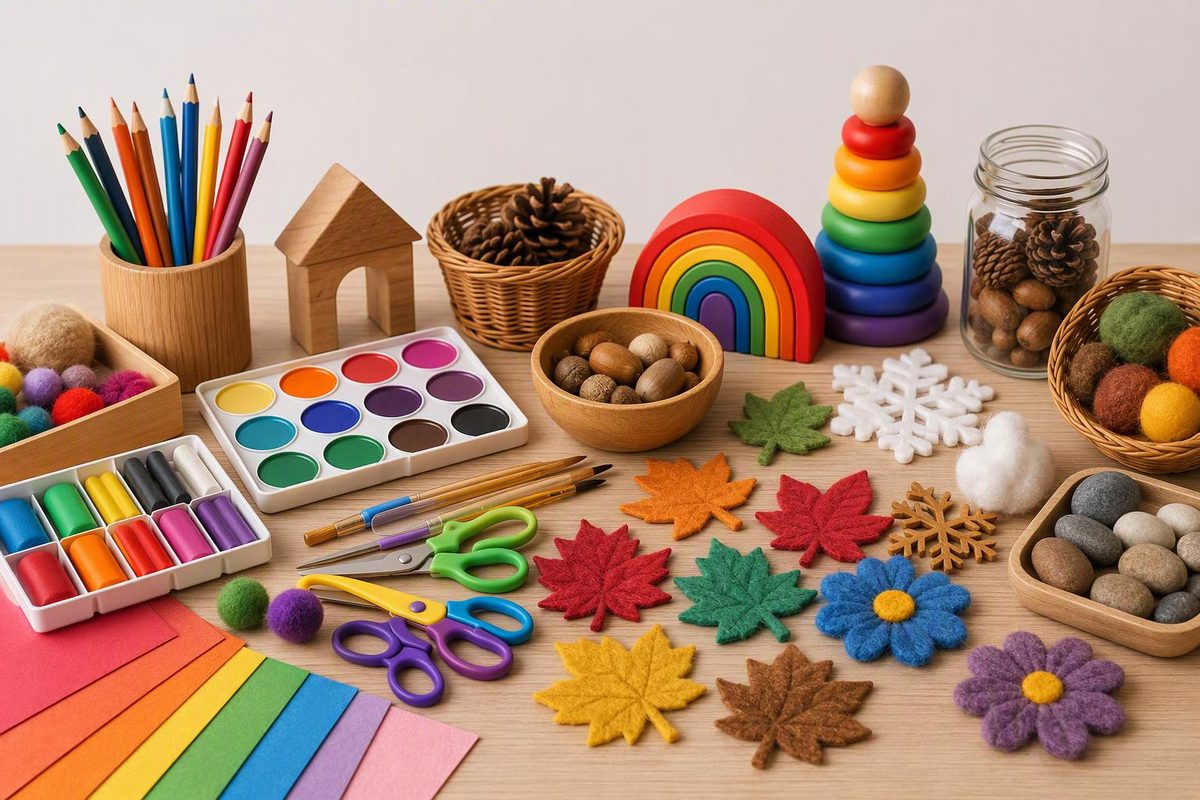
Activities for 2-year-olds can be as simple as rolling a ball, putting cloths in a basket or making marks on paper. Set out one invitation, show one action and let your child try it their way. There is no finished product to copy or set number of turns to complete.
The CDC’s activity guidance for age two recommends balls, blocks, simple art, puzzles, songs and helping with everyday chores. The ideas below turn those suggestions into easy setups, with opportunities to explore movement, language, hand control and pretend play—not tests of what a child should already do.
Before you set out materials
Choose toys labeled for your child’s age, inspect them for damage and supervise throughout play. Keep small parts, beads, buttons, coins and balloons out of these setups. For art, choose age-appropriate, nontoxic materials. Nemours KidsHealth’s toy-safety guidance explains that toy age labels reflect safety, not how advanced a child seems. Follow those labels even when you are supervising.
If your child mouths a material, remove it and offer a different activity. For a small group, provide duplicate supplies where possible rather than making every turn depend on sharing.
1. Roll a ball back and forth
Materials: A large, soft ball labeled for toddler use; clear floor space.
Set up and play: Sit facing your child with your legs apart. Roll the ball gently toward them and wait. They might push it back, carry it to you or watch before joining. Describe the action: “The ball rolled to you!”
Learning opportunity: Following a moving object, coordinating a push and experiencing a back-and-forth exchange.
- Simplify: Move closer and start with the ball beside their hands.
- Extend: Invite them to stand and kick it toward you instead.
- Safety check: Clear the route of toys and furniture edges; avoid small balls.
2. Build a little tower
Materials: Several large toddler blocks.
Set up and play: Put the blocks on a firm floor. Stack two, then offer your child another. They can add it, make a separate tower or line the blocks up. Try “One more?” rather than directing every placement.
Learning opportunity: Positioning objects, using hands together and exploring what makes a structure stand or fall.
- Simplify: Place one block on the floor and offer just one more.
- Extend: Build two low towers and compare which is taller.
- Safety check: Keep towers low and away from another child’s face. Put older siblings’ small construction pieces elsewhere.
3. Fill and empty a cloth basket
Materials: A shallow basket and several clean washcloths.
Set up and play: Place the cloths beside the basket. Invite your child to put them in, take them out and carry one to you. Model a simple direction: “Put the cloth in.” Later, ask whether they want to help put the cloths away.
Learning opportunity: Grasping and releasing, hearing words such as in and out, and participating in a household routine.
- Simplify: Offer one cloth and hold the basket steady.
- Extend: Offer two colors of cloth and invite matching pairs without requiring a correct answer.
- Safety check: Use a basket without sharp edges or a hinged lid. Keep detergent and laundry products out of reach.
4. Make big crayon marks
Materials: Large paper and a few chunky, age-appropriate crayons.
Set up and play: Place the paper on a stable, washable table. Draw one short mark on your own paper, then let your child explore theirs. Notice what happens: “You made a long line.” Scribbles are welcome; there is no need to trace a shape or letter.
Learning opportunity: Exploring pressure, hand movements and the connection between an action and a visible mark.
- Simplify: Offer one crayon and hold the paper still.
- Extend: Offer a second color or a larger sheet for longer movements.
- Safety check: Remove broken crayon pieces promptly and stop if crayons go into the mouth.
5. Put a toy to bed
Materials: A washable doll or stuffed toy with securely attached features, plus a washcloth for a blanket.
Set up and play: Lay the toy down and say, “Bear is sleepy.” Offer the cloth. Your child might cover the toy, pat it or wake it again. Follow their idea rather than insisting on a full bedtime sequence.
Learning opportunity: Exploring pretend actions and words connected with familiar care routines.
- Simplify: Model one action, such as patting the bear.
- Extend: Add a large, empty toy cup and pretend the bear wants a drink before bed.
- Safety check: Avoid miniature doll accessories and toys with loose eyes or buttons.
6. Find something in a book
Materials: A sturdy picture book with familiar objects or animals.
Set up and play: Sit together and let your child choose a page. Name something they look at or touch: “A dog!” Occasionally ask, “Where’s the dog?” Then pause. Pointing, looking, making a sound and saying a word are all ways to join.
Learning opportunity: Connecting pictures with words and sharing attention around a book.
- Simplify: Point and name without asking a question.
- Extend: Build on a word: if they say “dog,” respond, “Yes, a big dog.”
- Safety check: Use an intact book without loose pop-up pieces or detachable accessories.
7. Copy a body movement
Materials: Clear space; no equipment needed.
Set up and play: Face your child and tap your knees. Say, “Tap, tap!” Wait to see whether they copy. Try clapping, touching your head or reaching upward. You can also sing a familiar body-part song slowly, leaving room for your child to join.
Learning opportunity: Listening to action words, noticing body parts and experimenting with imitation.
- Simplify: Repeat one movement while seated.
- Extend: Let your child choose a movement for you to copy.
- Safety check: Use a nonslip surface and keep movements comfortable; do not pull a child’s arms into position.
8. Explore a simple puzzle
Materials: A toddler-rated inset puzzle with large, sturdy pieces.
Set up and play: Start with one piece removed. Name its picture and show the empty space. Let your child explore turning and placing the piece. If they want help, demonstrate beside them rather than moving their hand for them.
Learning opportunity: Comparing shapes, trying a different orientation and hearing names for familiar pictures.
- Simplify: Position the piece beside its matching space, facing the right way.
- Extend: Remove two or three pieces and let your child choose where to begin.
- Safety check: Check for splinters, loose knobs and damaged pieces; follow the puzzle’s age label.
Keep the invitation small
Offer one activity at a time and stop when your child moves away, becomes frustrated or needs a break. Repeating the same setup is fine; you do not need to add a harder step every time.
With several toddlers, let children play alongside one another rather than requiring a circle of perfect turns. The CDC notes that children this age play next to each other and still need adult help with sharing and conflicts.
For an older sibling or preschool group, the activities for kids ages 3–5 offer a separate starting point. Keep the toddler’s materials and expectations suited to age two rather than handing down the older child’s whole activity.