
Roll, Build, Copy and Pretend With Six Toddler Games
Find six toddler games using a ball, blocks or no supplies. Get clear steps, easier variations and safe ways to play together around 18–36 months.
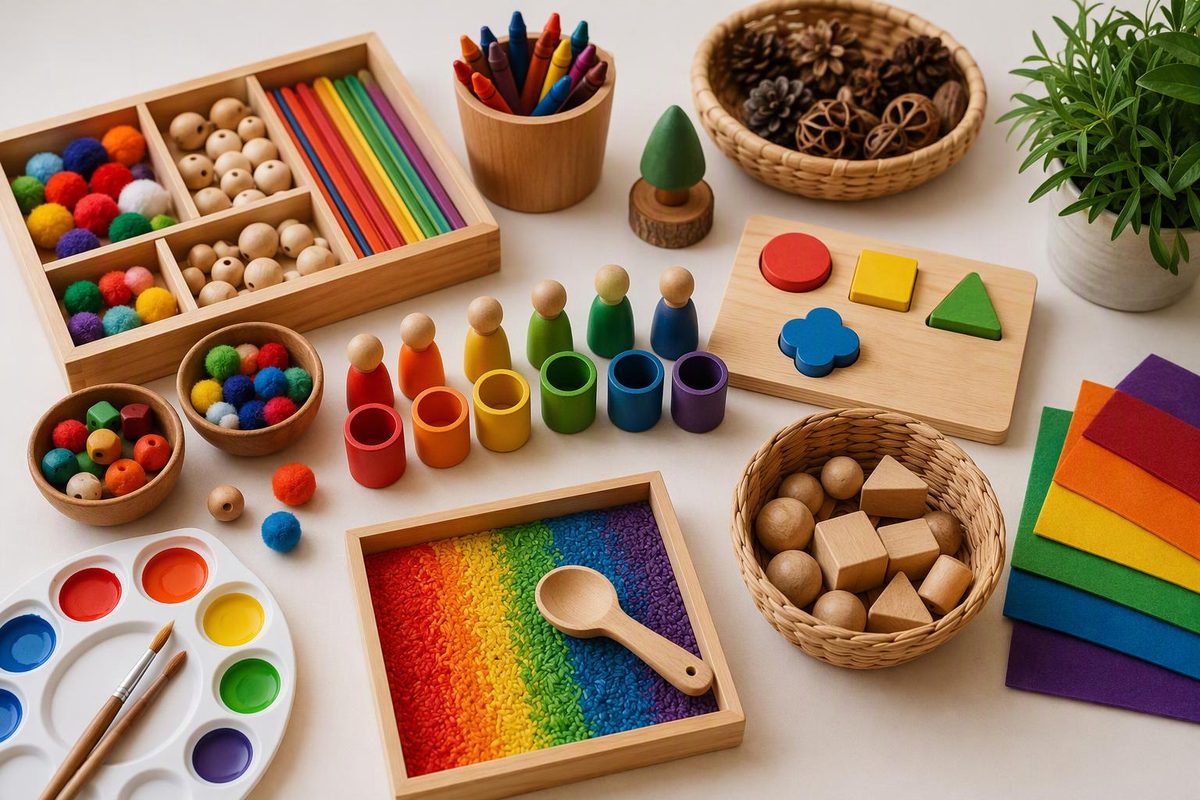
Six easy games for toddlers are rolling a ball, building and tumbling blocks, copying movements, moving and pausing, matching blocks, and putting Teddy to bed. These adult-and-child activities are designed for around 18–36 months, with ways to simplify or extend each game—not a checklist of what every child should do.
Choose the supplies you have; the tool shows matching games and how to start.
Pick A Game By Supplies
All six games are shown. Choose supplies to narrow the list.
| Game | Supplies | First Move |
|---|---|---|
| Roll it back | Large, lightweight, age-appropriate ball | Sit facing your child and gently roll the ball toward them. |
| Build, then tumble | Large, lightweight toddler blocks | Stack two blocks; invite your child to add one or push them over. |
| Copy my movement | None | Clap or pat your knees, then wait. Copy your child’s movement next. |
| Move and pause | Your voice; music optional | Move gently, say “Pause!” and model stopping. |
| Find its partner | Two matching pairs of large toddler blocks | Hold up a block and show how to find one like it. |
| Teddy’s bedtime | Toddler-safe stuffed animal and washcloth | Lay Teddy down and invite your child to cover the toy. |
Source: activities described above, informed by CDC’s 2-year activity suggestions and Harvard’s 18–36-month play guidance. Use age-labeled materials and stay nearby.
Show one action, then pause. Let your child watch, try or change the game. Stop when they turn away or become frustrated; there is no need to finish every round.
Use Toddler-Safe Materials And A Clear Play Space
Clear a floor space away from stairs, sharp furniture edges and loose objects. Stay nearby and use toys labeled for your child’s age. Check for damage and detachable pieces.
Avoid small balls, balloons, marbles and other small game pieces: the American Academy of Pediatrics’ choking-prevention guidance identifies these hazards and recommends following toy age labels. Supervision is not a substitute for suitable materials. In the United States, CPSC small-parts requirements prohibit hazardous small parts in products intended for children under 3.
1. Roll A Ball Back And Forth
Materials and setup: One large, lightweight, age-appropriate ball. Sit facing each other on the floor, close enough for an easy roll.
- Say, “Ready, roll!” and gently roll the ball toward your child.
- Invite them to push it back. If they carry it to you instead, accept that as their turn.
- Repeat while they are interested. Name the action: “You pushed the ball to me.”
Skill opportunity: Watching a moving object, coordinating a push and exchanging turns. CDC’s activity suggestions for 2-year-olds include rolling, kicking and throwing balls.
Make it easier: Move closer and help stop the ball within reach.
Extend the play: Roll between two large blocks set well apart as a wide goal. Keep it cooperative rather than counting misses.
2. Build A Tower, Then Tumble It
Materials and setup: A few large, lightweight toddler blocks on a stable floor surface.
- Stack two blocks and say, “Up, up.”
- Invite your child to add a block or gently push the tower over.
- Rebuild together, offering a block without requiring your child to take it.
Skill opportunity: Grasping, releasing, balancing objects and noticing cause and effect. CDC suggests taking turns building block towers and knocking them down.
Make it easier: Stack just two blocks and let your child remove the top one.
Extend the play: Invite them to choose a wider block for the bottom or build a second tower beside yours. Keep towers low and away from faces.
3. Copy Each Other’s Movements
Materials and setup: None. Play seated or standing in a clear space.
- Make one easy movement: clap, raise your arms or pat your knees.
- Say, “Can you do this?” and wait.
- Copy any movement your child offers—even if it differs from yours. Say, “Now I’m following you.”
Skill opportunity: Watching another person and remembering a movement. Harvard’s Center on the Developing Child includes imitation games among activities for older toddlers.
Make it easier: Repeat the same movement several times. A small hand movement or a look toward you can be a way to join.
Extend the play: Try two familiar actions in sequence, such as clap, then arms up. Return to one action if the sequence becomes frustrating.
4. Move And Pause Together
Materials and setup: Your voice, with optional quiet music. Leave enough room for swaying, marching or moving arms without bumping anyone.
- Say, “Move!” and demonstrate a comfortable movement.
- Say, “Pause!” and stop yourself briefly.
- Begin again. Keep every child in the game; nobody is out for moving during a pause.
Skill opportunity: Listening for a cue and practicing starting and stopping. Harvard recommends freeze-dance-style play but notes that toddlers may need repeated reminders to stop.
Make it easier: Play seated, moving and pausing only your hands. Model the pause each time.
Extend the play: Add “slow” and “fast,” using gentle movements rather than running.
5. Find A Matching Block
Materials and setup: Two pairs of large toddler blocks, each pair a matching color and shape. Keep them within easy reach.
- Put one block from each pair in front of your child.
- Hold up a matching block and say, “Let’s find one like this.”
- Place the pair together. Offer the remaining block for your child to match—or match it yourself while they watch.
Skill opportunity: Comparing objects and noticing similarities. Simple matching and sorting games appear in Harvard’s toddler activity guidance.
Make it easier: Use just one pair and show how they go together. Naming colors is not required.
Extend the play: Add a third pair or invite your child to gather all blocks of one color.
6. Put Teddy To Bed
Materials and setup: One toddler-safe stuffed animal without loose parts and a washcloth for its blanket. Place them on the floor or a low play surface.
- Say, “Teddy looks sleepy,” and lay the animal down.
- Offer the washcloth: “Would you like to cover Teddy?”
- Follow your child’s idea. Teddy might wake up, need a song or go for a walk instead.
Skill opportunity: Using familiar routines in pretend play and connecting actions with words. Harvard recommends joining toddlers’ imaginary play while letting the child direct it.
Make it easier: Model one action, such as gently patting Teddy.
Extend the play: Invite a short sequence: make a bed, cover Teddy, then sing. Keep the cloth on the toy, not over a child’s face.
Let Siblings Play Along Without Judging
Offer duplicate materials where possible so children can play alongside one another without waiting through long turns. CDC notes that 2-year-olds play next to each other and still need adult help with sharing and conflicts.
An older child can demonstrate a movement or build a separate tower without becoming the judge. Keep older siblings’ small toys out of the toddler’s play space. For children ready for more involved preschool play, try these indoor activities for ages 3–5.