
A Practical Week of Fall Learning with Leaves, Pumpkins, Art, and Play
Explore 15 ideas designed for ages 3-5, each with setup, adult prompts, adaptations, cleanup and safety notes for easier planning.
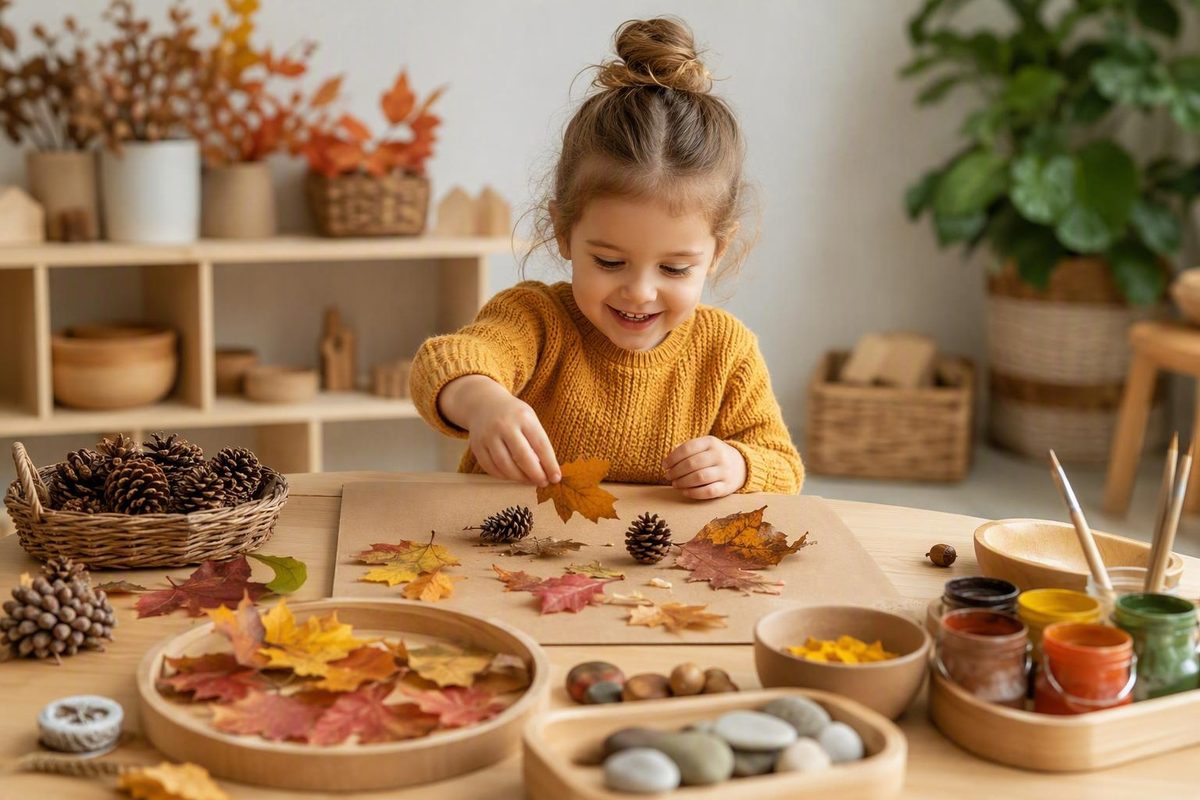
Autumn preschool activities do not require elaborate crafts, paid printables, or a new shopping list every day. Leaves, cardboard, washable paint, baskets, picture cards, large counters, and seasonal objects can move from sorting to storytelling, art, counting, observation, sensory play, and movement.
The 15 ideas below are designed with children ages three to five in mind, but age is only a starting point. Choose materials and directions according to each child’s readiness, mouthing behavior, motor control, sensory preferences, interests, and the supervision available.
How to choose an autumn activity for your group
The preparation and activity times below are editorial estimates, not universal standards. Collection time, group size, cleanup, adaptations, and children’s interest can change them considerably. The attention labels are also editorial planning cues—not safety classifications. Program rules, individual readiness, and the actual materials used should determine supervision.
| # | Activity | Learning focus | Setting | Prep estimate | Activity estimate | Mess | Format | Adult-attention cue |
|---|---|---|---|---|---|---|---|---|
| 1 | Leaf Laboratory | Sorting, counting, descriptive language | Indoors or outdoors | 5–10 min | 10–20 min | Low | Small group or individual | Stay nearby; inspect finds |
| 2 | Leaf Rubbings and Texture Prints | Texture, mark-making, comparison | Indoors | 5–10 min | 10–20 min | Low–medium | Individual or table group | Close attention with paint and leaves |
| 3 | Leaf Name or Letter Match | Letters, names, beginning sounds | Indoors | 5–10 min | 5–15 min | Low | Individual or small group | Based on piece size and mouthing |
| 4 | Pumpkin and Gourd Comparison | Comparing, sorting, ordering | Indoors or outdoors | About 5 min | 10–20 min | Low | Small group | Stay close to heavy or rolling objects |
| 5 | Pumpkin Wash | Observation, practical play, vocabulary | Indoors or outdoors | 5–10 min | 10–20 min | Medium | Small group | Continuous attention around water |
| 6 | Apple Color Sort and Stamp | Sorting, counting, printing | Indoors | 5–15 min | 10–25 min | Low–medium | Individual or small group | Adult controls all cutting |
| 7 | Roll-and-Build an Autumn Tree | Counting and one-to-one placement | Indoors | About 5 min | 5–15 min | Low | Individual, pair, or group | Based on counter and die size |
| 8 | Autumn Spin and Graph | Recording and comparing quantities | Indoors | About 10 min | 10–20 min | Low | Small group | Monitor spinner and counters |
| 9 | Autumn Sound Story | Listening, vocabulary, sequencing | Either | 5–10 min | 10–20 min | Low | Whole or small group | Monitor sound level and spacing |
| 10 | Signs-of-Autumn Walk | Local observation and description | Outdoors | 5–10 min | 10–30 min | Low | Whole or small group | Follow outdoor supervision procedures |
| 11 | Sink-or-Float Investigation | Predicting, observing, sorting | Either | About 10 min | 10–20 min | Medium | Small group | Continuous attention around water |
| 12 | Nature-Brush Painting | Marks, texture, tool choice | Either | 10–15 min | 10–25 min | Medium | Individual or table group | Close attention to paint and attachments |
| 13 | Large-Piece Autumn Sensory Bin | Filling, pouring, sorting, pretend play | Indoors | 5–10 min | 10–30 min | Low | Individual or small group | Based on contents and mouthing |
| 14 | Move Like a Leaf | Movement, action words, sequencing | Either | Under 5 min | 5–15 min | Low | Whole or small group | Active monitoring during movement |
| 15 | Autumn Market | Pretend play, counting, storytelling | Either | 10–20 min | 15–30 min | Low | Small group or center | Inspect props and monitor play |
Choose two or three formats that suit your setting, then repeat them with different objects or prompts. SkillSprouts likewise recommends selecting a few activities, following children’s interests, and repeating successful versions with variations (SkillSprouts’ autumn activity guidance).
Most ideas here are broadly seasonal: weather, harvest objects, plants, colors, movement, and neighborhood changes. They do not require Halloween, Thanksgiving, or another holiday. Add holiday-specific content only when it is appropriate for your families and community.
Each activity follows the same structure:
- Learning invitation
- Readiness
- Setting
- Materials
- Setup
- Steps
- Adult prompts
- Adaptations
- Extension
- Cleanup
- Safety
Prioritize reusable household materials such as cardboard packaging, paper scraps, baskets, cups, towels, blocks, fabric pieces, and washable art supplies. Collect natural objects only where permitted. Specialty trays, themed counters, commercial kits, and downloadable printables are optional.
Safety first: small parts, natural finds, food, tools, and sensory materials
The following matrix offers conservative planning cautions based on the supplied practitioner and childcare guidance. It is not medical, allergy, poisoning, product-safety, or regulatory advice. Adults should apply their program procedures, local requirements, and knowledge of each child whenever materials change.
| Hazard area | Planning check | Lower-complexity adjustment |
|---|---|---|
| Small pieces | Consider mouthing, ingestion risk, breakage, and whether pieces can shed | Replace seeds, beans, kernels, acorns, beads, buttons, or pom-poms with fabric leaves, large foam shapes, chunky blocks, cups, or cardboard tubes |
| Allergies and sensitivities | Check known food, plant, paint, scent, and material concerns under program procedures | Use food-free, scent-free, or synthetic substitutes |
| Food-based play | Consider allergies, hygiene, choking preparation, food waste, and applicable setting rules | Use cardboard produce, sponges, corks, or reusable stampers |
| Natural objects | Look for insects, mold, rot, splinters, sharp edges, damage, and unfamiliar plant material | Use photographs, paper shapes, fabric pieces, or commercial brushes |
| Water | Plan uninterrupted adult attention and an immediate response to spills | Use an empty prediction tray, dry brushes, cloths, or picture cards |
| Cutting and advanced tools | Decide which tools remain under adult control | Adults complete cutting and assembly; children can tear, tape, press dough, or use pre-cut pieces |
| Scents | Check whether fragrances and natural odors are acceptable | Choose unscented dough, paint, and sensory materials |
| Paint | Protect surfaces and separate craft materials from anything intended for eating | Use washable paint and dedicated craft objects |
| Nonedible mixtures | Label, supervise, store, and clean up according to setting procedures | Choose large dry props or a sealed sensory bag |
Small autumn materials—including seeds, dried beans, kernels, acorns, beads, buttons, and pom-poms—can be inappropriate where children mouth objects. Larger replacements reduce reliance on tiny fillers but are not automatically suitable for every child. Practitioner guidance also recommends checking natural finds for bugs or damage, considering allergies, supervising tools, and avoiding unknown berries (SkillSprouts’ safety recommendations).
Inspect collected objects before use and again after storage. Leave unfamiliar berries and plant parts alone, and discard damp, moldy, decaying, sharp, splintered, or damaged finds. Washing alone should not be treated as proof that an unidentified natural object is suitable; when identification, condition, or collection permission is uncertain, use a photograph or manufactured substitute.
Keep knives, irons, hammers, hot glue, and similar tools under direct adult control, or choose a method that does not require them. An adult should cut apples and pumpkins. Offer child-safe scissors only when they suit the individual child and the available supervision.
Before using food for art or sensory play, consider allergies, hygiene, choking preparation, food waste, and applicable program rules. ChildCareEd’s guidance similarly says food materials should be used only after checking allergies and relevant licensing requirements, which vary by location (ChildCareEd’s autumn setup guidance). Keep painted or heavily handled food separate from food intended for eating.
Label and supervise nonedible sensory materials. Inspire My Play explicitly describes rice colored with hand sanitizer as not taste-safe (colored-rice instructions), while Days With Grey identifies pumpkin cloud dough as nonedible (autumn sensory activity guidance). Describing a different material as “taste-safe” still does not make it an invitation to eat.
Sensory participation should be optional. A child can use dry utensils, wear appropriate gloves where permitted, handle a sealed bag, choose scent-free materials, or observe and direct an adult. For water activities, keep an adult continuously focused on the setup, place towels nearby, and clean spills promptly.
Three leaf activities for sorting, art, and language
If local leaves are scarce, wet, unsuitable, or not changing color, use photographs, paper leaves, fabric leaves, or shapes based on locally relevant plants.
1. Leaf Laboratory
- Learning invitation: Sort, count, compare, and describe leaves.
- Readiness: Begin with a few large, visibly different items. Use paper or fabric versions when natural finds are unsuitable.
- Setting: Table, floor mat, outdoor blanket, or nature center.
- Materials: Six to twelve inspected dry leaves or substitutes; baskets, trays, or paper circles; optional numeral or picture cards. Quantities are setup examples, not rules.
- Setup: Put the leaves in a shallow basket and provide two or more sorting spaces.
- Steps: Observe the leaves. Sort by color, size, shape, edge, markings, or another visible property. Count each group and discuss similarities and differences.
- Adult prompts: “What do you notice?” “How did you make your groups?” “Could we sort them another way?”
- Adaptations: Start with two contrasting categories and model one example. Let a child point while an adult moves the leaves. Use larger photographs or high-contrast paper shapes.
- Extension: Make a picture graph, build a repeating pattern, or write a child-dictated category label.
- Cleanup: Shake loose debris away from work surfaces. Discard damaged leaves and store only dry materials.
- Safety: Follow the natural-object checks in the safety matrix; remove crumbling or sharp pieces.
2. Leaf Rubbings and Texture Prints
- Learning invitation: Compare the marks made by different leaves.
- Readiness: Rubbing requires enough pressure to stabilize the paper; printing may be easier with adult-assisted pressing.
- Setting: Indoor art table or protected outdoor surface.
- Materials: Dry leaves for rubbings; fresh, intact leaves for prints; paper; peeled chunky crayons; washable paint; trays; optional grips and tape.
- Setup: For rubbings, place a leaf under paper and tape the paper if helpful. For prints, spread a thin layer of paint in a tray.
- Steps: Rub the side of a crayon over the covered leaf. Alternatively, apply paint to the veined side of a fresh leaf, press it onto paper, and peel it away carefully rather than sliding it.
- Adult prompts: “Which lines can you see?” “How are these prints different?” “What happens with more or less paint?”
- Adaptations: Offer chunky crayons, sponge grips, pre-taped paper, or shared pressing with the child’s agreement.
- Extension: Layer prints, create a pattern, or match a rubbing to its original leaf.
- Cleanup: Dry artwork on a rack, wipe surfaces, and discard torn or paint-saturated leaves.
- Safety: Keep painted leaves as craft materials and check crayons and leaves for broken pieces.
Fresh leaves, paint applied to the veined side, and careful peeling are also specified in Inspire My Play’s leaf-printing method.
3. Leaf Name or Letter Match
- Learning invitation: Match familiar letters without a worksheet.
- Readiness: Start with letters the child recognizes, particularly those in the child’s name.
- Setting: Table, floor, wall, or felt board.
- Materials: Large paper or fabric leaves, marker, reusable adhesive, and optional beginning-sound pictures.
- Setup: Write one clear letter on each leaf. Prepare uppercase/lowercase pairs, name letters, or matching pictures.
- Steps: Place two to five choices in view. Match uppercase to lowercase, a letter to the same letter in a name, or an initial sound to a picture.
- Adult prompts: “Can you find the first letter in your name?” “Which two belong together?” “What sound do you hear first?”
- Adaptations: Reduce the choices, use high-contrast print, or let a child point or eye-gaze while an adult places the match.
- Extension: Arrange the leaves to build a name or short seasonal word.
- Cleanup: Stack each set in an envelope or reusable bag.
- Safety: Choose piece sizes based on mouthing behavior and remove loose adhesive or damaged foam.
Three pumpkin, apple, and harvest investigations
These invitations use produce or replicas as objects for comparison, washing, or printing. They provide opportunities to sort, count, grip, scrub, observe, and talk; they do not demonstrate a developmental outcome.
4. Pumpkin and Gourd Comparison
- Learning invitation: Organize objects by visible and tactile properties.
- Readiness: Start with two objects and one comparison, such as smooth/bumpy or smaller/larger.
- Setting: Floor mat, table, or outdoor blanket.
- Materials: Mini pumpkins, gourds, or durable replicas; baskets; optional balance scale.
- Setup: Inspect the objects and arrange them where each one is visible.
- Steps: Describe color, texture, markings, shape, and relative size. Sort the objects, then order them from smallest to largest.
- Adult prompts: “How are these alike?” “What is different?” “Which belongs in this group?” “Which might feel heavier?”
- Adaptations: Offer two objects, stabilize rolling pieces in towel rings, or use photographs and replicas.
- Extension: Predict which will roll farther, feel heavier, or fit an established group, then test only when the setup is manageable.
- Cleanup: Return dry objects to ventilated storage and discard produce showing decay.
- Safety: Check for soft spots, mold, sharp stems, and breakage; position heavier objects where they cannot fall onto feet.
Published gourd activities likewise compare color, markings, and size before grouping and ordering the objects (gourd comparison ideas).
5. Pumpkin Wash
- Learning invitation: Scrub, rinse, dry, and describe what changes.
- Readiness: Consider whether water, splashing, damp textures, and the object’s weight are manageable.
- Setting: Water table, shallow floor tub on a waterproof mat, or outdoors.
- Materials: Washable pumpkins or plastic replicas, shallow water, sponges, soft brushes, cups, and towels.
- Setup: Put a small amount of water in a stable tub, surround it with towels, and limit the group to what one adult can closely monitor.
- Steps: Inspect a pumpkin, scrub it, rinse it, and dry it. Compare its appearance and feel before and after washing.
- Adult prompts: “What changed?” “What stayed the same?” “Where is dirt hiding?” “Which tool would you choose?”
- Adaptations: Create a dry station with brushes and cloths, stabilize the pumpkin in a towel ring, or use a lightweight replica.
- Extension: Sequence pictures showing inspect, scrub, rinse, and dry.
- Cleanup: Empty the tub immediately, dry surfaces and materials, and hang cloths to dry.
- Safety: Apply the water precautions in the safety matrix and do not leave standing water accessible after the activity.
6. Apple Color Sort and Stamp
- Learning invitation: Sort colors, count groups, and optionally explore printed patterns.
- Readiness: Use large paper apples when children mouth objects or should not handle food.
- Setting: Indoor table or protected outdoor art area.
- Materials: Large red, yellow, and green paper apples or washable replicas; matching mats or paper trees; optional real apple and washable paint.
- Setup: Arrange color-coded mats. If stamping, an adult cuts the apple away from children and prepares an easy-to-hold piece if needed.
- Steps: Sort apples by color. Count each group and compare more, fewer, or the same. In the optional second phase, press an apple half or quarter into paint and stamp it onto paper.
- Adult prompts: “How are these alike?” “What is different?” “Which group has more?” “What pattern did the stamp make?”
- Adaptations: Begin with two colors. Substitute sponge shapes, corks, cardboard apples, or reusable stampers.
- Extension: Make an alternating pattern or dictate a label for each tree.
- Cleanup: Wash reusable tools and dispose of or compost used food according to setting procedures.
- Safety: An adult controls cutting. Check food policies and allergies first, and do not treat painted apples as food.
Apple-stamping examples use adult-cut halves or quarters, sometimes with an added handle; the instructions do not establish painted food as edible (apple-stamping directions).
Three no-printable math and literacy activities
Counting, letters, comparison, and storytelling can emerge from reusable materials. Adults can observe children’s attempts without turning play into a test.
7. Roll-and-Build an Autumn Tree
- Learning invitation: Connect a displayed quantity with one-to-one placement.
- Readiness: Use quantities one to three before introducing a standard die when helpful.
- Setting: Table, floor, or magnetic board.
- Materials: Cardboard with a bare tree drawn on it, one die or numeral cards, and large paper or felt leaves.
- Setup: Place the tree in the center and the leaves in a basket.
- Steps: Roll the die, identify or count the dots, then place that number of leaves on the tree while counting each one.
- Adult prompts: “How many dots?” “Can we touch each leaf as we count?” “Do we need another leaf?”
- Adaptations: Use a one-to-three die, numeral cards, high-contrast leaves, or partner-assisted placement.
- Extension: Children ready for more complexity can roll two dice and combine the quantities informally. This is optional, not an age-based milestone.
- Cleanup: Store the leaves and die in a bag attached to the tree.
- Safety: Use large, durable pieces and remove a cracked die or shedding leaf.
The one-die format and optional two-dice variation also appear in Pocket of Preschool’s fall counting activities.
8. Autumn Spin and Graph
- Learning invitation: Record repeated results and compare columns.
- Readiness: Children can point or place objects instead of writing.
- Setting: Small-group table or floor mat.
- Materials: Cardboard spinner with two or three pictures—such as leaf, apple, and pumpkin—plus blocks, stickers, large counters, or markers.
- Setup: Draw labeled columns. Use a spinner without loose hardware; an adult can hold a pencil while a paper clip spins around it.
- Steps: Spin, name or point to the result, and add one object or mark to the corresponding column. Repeat, then compare the columns.
- Adult prompts: “Which has more?” “Which has fewer?” “Are any equal?” “What might happen next?”
- Adaptations: Use two high-contrast pictures, tactile markers, adult recording, or block placement instead of drawing.
- Extension: Change one picture or begin a second round and compare the two graphs.
- Cleanup: Store the spinner flat and return counters to a closed container.
- Safety: Avoid loose fasteners and choose counter sizes according to mouthing behavior.
9. Autumn Sound Story
- Learning invitation: Join a story through sounds, movements, words, or sequencing.
- Readiness: Consider language confidence, group-noise tolerance, and comfort performing in front of others.
- Setting: Circle area, reading corner, outdoors, or a quiet group.
- Materials: A short invented story; optional picture cards, scarves, rhythm sticks, shakers, or sturdy containers used as drums.
- Setup: Choose recurring elements such as wind, rain, crunchy leaves, footsteps, and local animals. Assign each an optional sound or movement.
- Steps: Tell the story slowly and pause for the corresponding sound or gesture. Retell it and switch roles.
- Adult prompts: “What word describes the wind?” “What happened first?” “Which sound matches this picture?” “What could happen next?”
- Adaptations: Offer a quiet role such as holding a picture, turning a page, signaling a sound, or making a small hand motion.
- Extension: Invite children to dictate the next event, select descriptive words, or arrange three pictures in story order.
- Cleanup: Collect instruments and save child-dictated lines for another retelling.
- Safety: Keep the volume comfortable, inspect homemade instruments, and maintain personal space.
Adults can informally notice counting attempts, one-to-one placement, comparison words, turn-taking, sound recognition, and storytelling choices. These observations can guide the next invitation, but they are not scores or diagnostic assessments.
Two simple autumn science and nature activities
The most inclusive seasonal question is not “Where are the red leaves?” but “What is changing here?” Autumn may appear through rain, dry ground, clothing, local foods, plant conditions, sounds, or changing neighborhood routines.
10. Signs-of-Autumn Walk
- Learning invitation: Notice and describe local seasonal conditions.
- Readiness: Plan the route around mobility, weather, noise, toileting, and group-supervision needs.
- Setting: Playground, garden, sidewalk, courtyard, park, or a view through a window.
- Materials: Optional picture cards, clipboard, adult-operated camera, or a basket where collection is permitted.
- Setup: Preview the route and decide what children may observe, photograph, point to, or collect.
- Steps: Look for changes in plants, weather, clothing, light, sounds, or animal activity. Children can point, photograph, or mark picture cards instead of collecting.
- Adult prompts: “What do you notice today?” “What looks or feels different?” “What can you hear?” “How could we remember this?”
- Adaptations: Shorten the route, use seated observation, bring photographs indoors, or provide nonverbal response cards.
- Extension: Compare photographs from two days or dictate a sentence for a class chart.
- Cleanup: Shake outdoor debris away from work surfaces and inspect permitted finds before bringing them inside.
- Safety: Avoid disturbing living plants and animal habitats. Collect only where permitted, leave unknown berries alone, and observe rather than collect when uncertain.
11. Sink-or-Float Investigation
- Learning invitation: Predict, test, observe, sort, and represent results.
- Readiness: Use a few large objects and a group small enough for continuous adult attention.
- Setting: Water table, shallow tub, outdoor table, or dry prediction station.
- Materials: Shallow water, towels, a leaf, inspected pinecone, washable pumpkin replica, or another large local object; two result cards.
- Setup: Put towels under a stable tub and select only a few objects.
- Steps: Show one object, invite a prediction, test it, observe what happens, and place its photograph or picture card in the corresponding group.
- Adult prompts: “What do you think will happen?” “What did you see?” “Did anything surprise you?” “How could we show the result?”
- Adaptations: Let children point to prediction cards while an adult handles the objects, or use an empty tub for prediction-only play.
- Extension: Make a picture chart or test another object made from a similar material.
- Cleanup: Empty the tub, dry reusable objects, clean spills, and discard compromised natural materials.
- Safety: Apply the water precautions in the safety matrix. Observe rather than promise a result because material, condition, size, and trapped air can differ.
Two low-cost art, sensory, and fine-motor setups
These are open-ended invitations rather than crafts with a required model. Focus conversation on texture, pattern, tool choice, planning, and persistence—not whether every finished product looks alike.
12. Nature-Brush Painting
- Learning invitation: Test the lines, prints, and textures made by different tools.
- Readiness: Consider grip, reach, paint tolerance, and willingness to handle natural material.
- Setting: Easel, table, floor, or outdoor wall covered with paper.
- Materials: Inspected leaves, grasses, or suitable local plant material; sturdy handles; adult-secured elastic bands; washable paint; paper. Commercial brushes, sponges, and rollers are alternatives.
- Setup: An adult attaches each material securely to a handle. Tape paper vertically or horizontally according to access needs.
- Steps: Dip or brush the tool lightly in paint, test a mark, compare it with another tool, and choose how to combine the marks.
- Adult prompts: “What texture does this make?” “Which tool makes a wide line?” “What pattern are you planning?” “What could you try next?”
- Adaptations: Use thick handles, sponge grips, rollers, welcomed hand painting, or adult-assisted tool holding. A paint-free water-mark version can work outdoors.
- Extension: Name the brushes, make a tool-choice chart, or create a repeating pattern.
- Cleanup: Remove and discard natural attachments, wash reusable handles, and dry tools.
- Safety: Adults manage elastic bands and remove loose or broken parts. Apply the matrix checks for plants and paint.
13. Large-Piece Autumn Sensory Bin
- Learning invitation: Fill, pour, hide, find, sort, transport, and invent.
- Readiness: Base the contents on mouthing behavior, sensory preferences, reach, and supervision—not age alone.
- Setting: Floor bin, tabletop tray, or individual basket.
- Materials: Fabric leaves, large foam pumpkins, cardboard tubes, chunky blocks, scoops, cups, and baskets.
- Setup: Begin with six to ten large objects and two tools as an editorial starting point. Add complexity only when it helps the play.
- Steps: Fill and empty containers, sort objects, hide and find pieces, transport materials, or create an autumn scene.
- Adult prompts: “How does that feel?” “Which tool will move it?” “What pattern did you make?” “What is your plan?” “What could you try if it does not fit?”
- Adaptations: Use hands instead of tongs, a separate tray, dry utensils, a sealed bag, scent-free materials, or an observation role.
- Extension: Add large clothespins or child-suited tongs, press objects into dough, tear paper for a collage, or peel large stickers.
- Cleanup: Count pieces into labeled containers, wipe the bin, and store everything dry.
- Safety: Treat this as an alternative to small fillers, not a guarantee against every hazard. Inspect foam, cardboard, clips, and tools for damage.
Other tool-free options include pre-torn paper instead of scissors and dough pressing instead of threading. No child needs to touch a disliked texture or smell to participate.
Two movement and pretend-play activities
Movement and dramatic play can reuse the same words, baskets, signs, and large props introduced elsewhere in the week.
14. Move Like a Leaf
- Learning invitation: Interpret movement words in a personally manageable way.
- Readiness: Consider balance, mobility, personal-space awareness, and tolerance for fast group movement.
- Setting: Open indoor space or level outdoor area.
- Materials: Optional action cards or scarves.
- Setup: Clear obstacles, mark personal spaces, and establish a no-contact format.
- Steps: Call or show actions such as drift, spin, tumble, float, stretch, and crunch. Children interpret them through standing, seated, arm-only, or scarf-based movement.
- Adult prompts: “Can you drift slowly?” “What comes after spin?” “Which motion stays low?” “What new leaf word should we add?”
- Adaptations: Offer seated actions, smaller movements, visual cards, slower pacing, or a role displaying the next card.
- Extension: Children select three motions and arrange them into a sequence for the group to copy.
- Cleanup: Gather cards and scarves and remove floor markers.
- Safety: Maintain personal spaces, avoid contact, and adjust speed to the room and participants.
15. Autumn Market
- Learning invitation: Sort stock, count requests, make lists, negotiate roles, and invent stories.
- Readiness: Use a small number of roles and props for children new to pretend play.
- Setting: Dramatic-play center, kitchen area, porch, or outdoor table.
- Materials: Baskets; large pretend apples, pumpkins, leaves, or local harvest items; reusable bags; picture lists; signs; optional numeral labels.
- Setup: Arrange two or three categories of stock, a seller space, and a place for returned items.
- Steps: Sort the stock, request or count a quantity, dictate a list, and take turns as shopper, seller, stocker, or delivery worker.
- Adult prompts: “What comes first on your list?” “Where should this go?” “How many did the shopper request?” “How can you solve the space problem?” “What happened at the market?”
- Adaptations: Use picture lists, one-step requests, nonverbal role cards, seated access, large bag handles, or adult narration.
- Extension: Add numeral signs, invent descriptions for unusual produce, or reorganize the market.
- Cleanup: Sort props into picture-labeled baskets and inspect them before storage.
- Safety: Use cardboard or fabric food where real food would create allergy or waste concerns. Select prop sizes according to mouthing behavior.
For an outdoor variation, children can toss soft toy apples into baskets at adjustable distances, as described by Learning Village (fall movement ideas). Use soft toys rather than real apples as throwing objects.
Adults can notice spatial language, sequencing, counting attempts, collaborative planning, role negotiation, and imaginative storytelling without scoring the play. Readers seeking a holiday-specific theme can separately explore Total Preschool’s Thanksgiving activity feature for ages three to five, which covers crafts, counting, songs, gratitude, and fine-motor ideas.
A five-day plan that reuses the same autumn materials
This sample week keeps the supply list short: inspected or paper leaves, cardboard trees, baskets, large counters, washable paint, towels, picture cards, and a few pumpkins, gourds, or replicas.
| Day | Main invitations | Materials reused |
|---|---|---|
| Monday | Signs-of-Autumn Walk; Leaf Laboratory | Picture cards, leaves, baskets |
| Tuesday | Roll-and-Build Tree; Leaf Name or Letter Match | Cardboard tree, paper leaves, cards |
| Wednesday | Pumpkin and Gourd Comparison; Sink-or-Float | Produce or replicas, baskets, cards, towels |
| Thursday | Nature-Brush Painting; Autumn Sound Story | Leaves, paint, paper, picture cards |
| Friday | Move Like a Leaf; Autumn Market | Action cards, baskets, leaves, pretend produce |
Three ways to use the plan
Center version: Leave one familiar invitation available for several days. Keep the Autumn Market open, for example, and gradually add sorted leaves, letter signs, pumpkin replicas, and picture lists.
Small-group version: Offer one brief adult-facilitated activity, then place a simplified version in a center. After comparing several pumpkins together, children might revisit two replicas with “same” and “different” cards.
Home version: Choose one activity each day or repeat a favorite. A paper-leaf sorting game can become a counting tree the next day and a name-building activity later in the week.
Use short, flexible blocks. ChildCareEd suggests 10–15-minute station rotations as one practical example, not a universal requirement (suggested autumn station routine). Stop while interest remains positive, repeat an activity when children want more, or simplify when the setup competes with the intended play.
Readiness-based adjustments
Across the week, consider:
- Fewer choices and larger pieces
- One-step directions before longer sequences
- Adult modeling without requiring imitation
- Visual choice or sequence cards
- Seated access and comfortable reach
- Thick handles, adaptive grips, or stabilized containers
- High-contrast pictures and uncluttered backgrounds
- Pointing, placing, eye-gaze, gesture, or partner-assisted responses
- Scent-free, dry, sealed, or observation-only sensory options
For additional complexity, introduce a second sorting rule, combine two quantities informally, dictate labels, invent a story, make a prediction chart, or invite children to design another use for the materials.
Informal observation can remain simple:
- Which descriptive words does the child use or understand?
- How does the child approach counting or one-to-one placement?
- Does the child repeat a strategy or change it?
- Which access adjustment is helpful?
- How does the child communicate a prediction?
- What supports persistence when something does not work?
- How does the child create, negotiate, or collaborate?
These notes can guide the next invitation; they should not be used to rank children or as diagnostic assessments.
End-of-day materials reset
- Dry leaves, brushes, tubs, and reusable produce.
- Reinspect natural items and props for mold, insects, cracks, loose parts, and sharp edges.
- Discard damaged or questionable materials.
- Wash paint tools and wipe protected surfaces.
- Empty water and dry spill areas.
- Count sensory-bin pieces into labeled containers.
- Store paint and nonedible mixtures according to program procedures.
- Prepare only the cards and baskets needed for the next day.
For a simple family connection, send home a no-purchase prompt: “Notice one local seasonal change on your way home,” or “Sort safe household objects by color or size.” Families can participate without buying pumpkins, finding conventional autumn leaves, or completing a craft.
Frequently asked questions
What are the easiest autumn preschool activities to prepare in under 10 minutes?
Using this guide’s editorial estimates, the quickest options are Move Like a Leaf, Roll-and-Build an Autumn Tree, Leaf Name or Letter Match, Pumpkin and Gourd Comparison, and a simplified Leaf Laboratory.
Preparation is fastest when inspected materials are stored as complete sets. Keep paper leaves with the cardboard tree, action cards in one envelope, and sorting baskets beside reusable produce. “Under 10 minutes” remains an estimate; inspection, adaptation, and cleanup may take longer.
Which autumn activities can I use with children who still mouth objects?
Favor large paper or fabric leaves, big foam shapes, chunky blocks, cardboard tubes, large cups, washable pumpkin replicas, oversized picture cards, and adult-held tools. A Large-Piece Autumn Sensory Bin, Move Like a Leaf, Autumn Sound Story, or wall-sized Roll-and-Build Tree can be adapted without tiny fillers.
Avoid seeds, dried corn, beans, acorns, beads, buttons, pom-poms, and other small or breakable pieces when mouthing is a concern. Continue close monitoring because “large-piece” does not mean hazard-free, particularly if an item cracks, compresses, or sheds.
How can I adapt autumn activities for different sensory or fine-motor needs?
Reduce the number of materials, stabilize paper and containers, provide thick handles or sponge grips, and allow hands instead of tongs. Replace cutting with tearing, threading with dough pressing, and drawing with pointing or object placement.
For sensory access, offer a dry utensil, separate tray, sealed bag, scent-free version, appropriate gloves where permitted, or an observation role. Use vertical, horizontal, seated, or floor-level surfaces according to comfortable reach. Messy or scented participation should remain optional.
What can I use if pumpkins, apples, acorns, or colorful leaves are unavailable?
Use cardboard produce, fabric leaves, foam shapes, photographs, sponges, corks, blocks, paper circles, or silhouettes based on local plants. The useful feature is what children can do with the material: compare, sort, count, print, describe, move, or include it in a story.
For nature activities, ask what is changing locally. Weather, clothing, neighborhood routines, available foods, sounds, and plant conditions can all provide seasonal material without requiring red leaves or cool temperatures.
How long should a preschool autumn activity last?
There is no single correct duration. Many activities here have editorial estimates of 5–20 minutes, while open-ended centers may remain available longer. Group size, readiness, sensory comfort, transitions, and interest all affect useful length.
Watch participation rather than treating the clock as a target. End or simplify when children leave, show discomfort, repeatedly use materials in unintended ways, or need more support than the setting can provide. Repeat the invitation another day when interest remains.
A useful autumn plan does not require dozens of purchases or fifteen activities completed once. A few carefully selected, reusable materials can support varied play throughout the week. Choose according to children’s readiness and your local season, repeat the formats that hold interest, review the safety matrix before setup, and treat children’s words, choices, predictions, and strategies as the best clues about what to offer next.