
10 Easter Crafts for Preschoolers: Easy, Playful Ideas
Choose 10 Easter crafts for preschoolers using paper, paint and glue, with clear steps, skill opportunities, adaptations and safety checks.
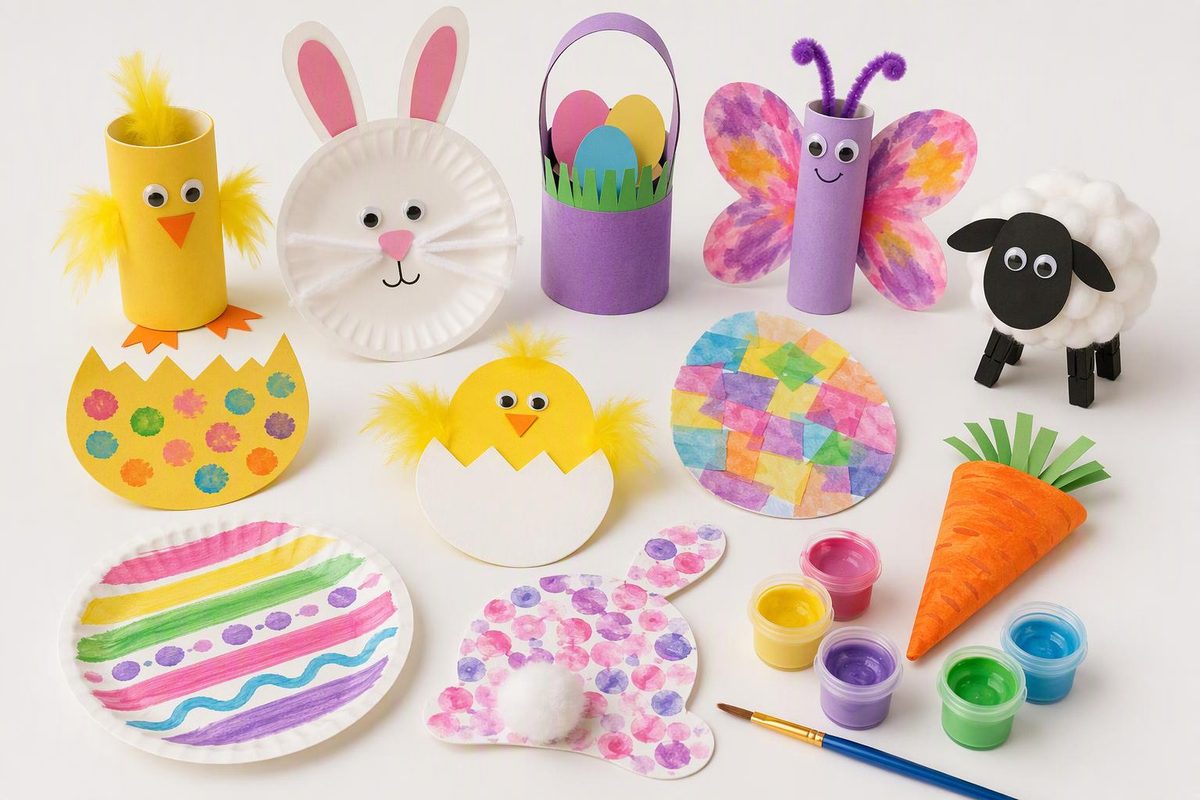
These Easter crafts for preschoolers use paper, washable paint, crayons and glue rather than specialty kits. Choose one by the action children are ready to practice: tearing, snipping, stamping, weaving, drawing or making a simple pattern.
A finished bunny or egg does not need to match an adult model. NAEYC’s guidance on process-focused art emphasizes exploration, child choice and creating without one right result. It lists painting, stamping, weaving, drawing and collage among suitable open-ended experiences (NAEYC). The ideas below provide a starting shape or theme while leaving colors, marks and arrangement to the child.
1. Torn-paper Easter egg collage
Materials: Cardstock, pencil, colored paper, labeled child-safe glue stick
Draw a large egg on cardstock. Invite the child to tear colored paper into pieces and glue them inside, across or beyond the outline. Overlapping pieces make the egg especially colorful.
- Skill opportunity: Pinching, tearing, arranging and gluing
- Simplify: Tear several large starter pieces, then let the child place them.
- Extend: Make stripes, an AB pattern or two sides with different colors.
2. Sponge-stamped egg painting
Materials: Cardstock, washable tempera paint, shallow trays, clean kitchen sponge, scissors for adult preparation
An adult cuts the sponge into a simple circle, triangle or stripe shape and draws a large egg. The child dips, presses and lifts the sponge to decorate it. Offer two or three paint colors and let the prints overlap.
- Skill opportunity: Tool control, color exploration and cause and effect
- Simplify: Use one large sponge and one color.
- Extend: Ask, “What happens when the blue print overlaps the yellow one?”
3. Paper-plate bunny face
Materials: Plain paper plate, crayons, pink and white paper, glue
The child draws the bunny’s eyes, nose, mouth and whiskers. Add two paper ears and, if wanted, paper teeth. Rather than placing the features for the child, talk about what the bunny might need and let the child decide where each part belongs.
- Skill opportunity: Drawing, spatial planning and face-part vocabulary
- Simplify: Provide pre-cut ears and let the child draw the face.
- Extend: Add an expression and dictate a sentence about how the bunny feels.
4. Fork-painted fluffy chick
Materials: Yellow washable paint, sturdy plastic fork, cardstock, orange and white paper, glue
Place a small puddle of yellow paint on the paper. Show how to press the back of the fork into the paint and pull outward to make feathery marks. Once dry, add paper eyes, a beak and legs.
- Skill opportunity: Grasp, pressure control and descriptive language
- Simplify: Draw a large circle as a painting area.
- Extend: Compare short, long, straight and curved fork marks.
5. Coffee-filter watercolor eggs
Materials: White basket-style coffee filters, washable markers, paintbrushes, water, tray, cardstock, glue
Flatten a filter on a tray. The child makes marker dots and lines, then dabs them with a damp brush to watch the colors spread. Let the filter dry flat. An adult can cut it into an egg shape before the child glues it to cardstock.
- Skill opportunity: Careful dabbing, observation and color exploration
- Simplify: Use a thick brush and only a little water.
- Extend: Make two eggs and compare how more or less water changed the marks.
6. Woven paper Easter basket
Materials: Construction paper, safety scissors, glue stick, paper scraps
An adult folds a sheet of paper and cuts several long slits, stopping before the edge. Open it flat. Help the child weave paper strips over and under the slits, then glue the loose ends. Add a paper handle and fill the basket with drawn or cut-paper eggs.
- Skill opportunity: Using two hands together, sequencing and early pattern work
- Simplify: Make wide strips and only three slits.
- Extend: Alternate two strip colors or invite the child to cut the strips.
The American Academy of Pediatrics’ HealthyChildren.org lists cutting with safety scissors and pasting among common art activities for ages four to five. Its guidance also advises close supervision when younger preschoolers explore tools (HealthyChildren.org). Match the cutting task to the individual child rather than requiring every preschooler to do it.
7. Cardboard-tube bunny print
Materials: Three clean, dry cardboard craft tubes, washable paint, paper, shallow tray
Keep one tube round for the bunny’s head. Gently pinch two more tubes into long oval shapes for ears. The child dips the tube ends into paint and stamps a head with two ears, then adds details with crayons after the paint dries.
- Skill opportunity: Coordinating separate shapes to form a picture
- Simplify: An adult holds the paper steady while the child stamps.
- Extend: Make big and small rabbits or count the ear prints.
8. Paper-strip Easter egg
Materials: Colored paper strips, cardstock, glue stick, crayons
Draw a large egg. The child glues strips across it in any arrangement. When the glue is dry, an adult trims the strip ends along the egg outline or leaves them extending outward for a fringed effect.
- Skill opportunity: Positioning pieces and comparing lengths
- Simplify: Offer short, wide strips that fit easily in the egg.
- Extend: Sort strips by length first or create a repeating color pattern.
9. Potato-masher flower prints
Materials: Washable paint, clean potato masher reserved for art, large paper, crayons
This is a spring-themed Easter-table craft without eggs or bunnies. Dip the masher lightly in paint and press it onto paper to form flower heads. When the prints dry, the child draws stems, leaves, insects or a garden around them.
- Skill opportunity: Large-tool control, printmaking and imaginative drawing
- Simplify: Tape the paper to the table and use one paint color.
- Extend: Count visible sections in the prints or add details inspired by the torn-paper bee craft.
For more seasonal options that are not tied to one holiday, see these spring preschool ideas.
10. Child-designed Easter card
Materials: Folded cardstock, crayons, washable paint or paper scraps, glue stick
Offer the materials from one or two crafts above and invite the child to make a card for someone. They might stamp an egg, collage a bunny or draw a spring scene. Ask whether they want to dictate a message, make letter-like marks or write their name.
- Skill opportunity: Creative choices, meaningful mark-making and communication
- Simplify: Write the dictated message on a separate strip for the child to glue inside.
- Extend: Help the child listen for the first sound in the recipient’s name and find the matching letter.
Set up the craft table safely
- Choose washable, nontoxic art materials labeled for the child’s age, and follow the directions on each package.
- Closely supervise scissors, glue, paint and unusual painting tools. Offer safety scissors only when the child is ready to use them.
- Skip loose buttons, beads, sequins, googly eyes and tiny pom-poms when children mouth materials or when younger children share the space. Current CPSC guidance explains that small parts in products for children under three can create choking, aspiration or ingestion hazards; warning labels may also apply to certain products intended for older children (CPSC). Paper shapes and drawn details are easy substitutes.
- Check plastic tools and cardboard tubes before use; discard anything cracked, sharp, damp or dirty.
- Keep paint water separate from drinking cups, and have children wash their hands after crafting.
Prepare only the parts children cannot yet manage safely. A preschooler can still choose the colors, place the pieces, make the marks and decide when the Easter craft is finished.