
5 Play-Based Lesson Plans for 2-Year-Olds
Plan a playful week for 2-year-olds with a repeatable daily sequence, simple supplies, five skill-focused lessons and easy adaptations.
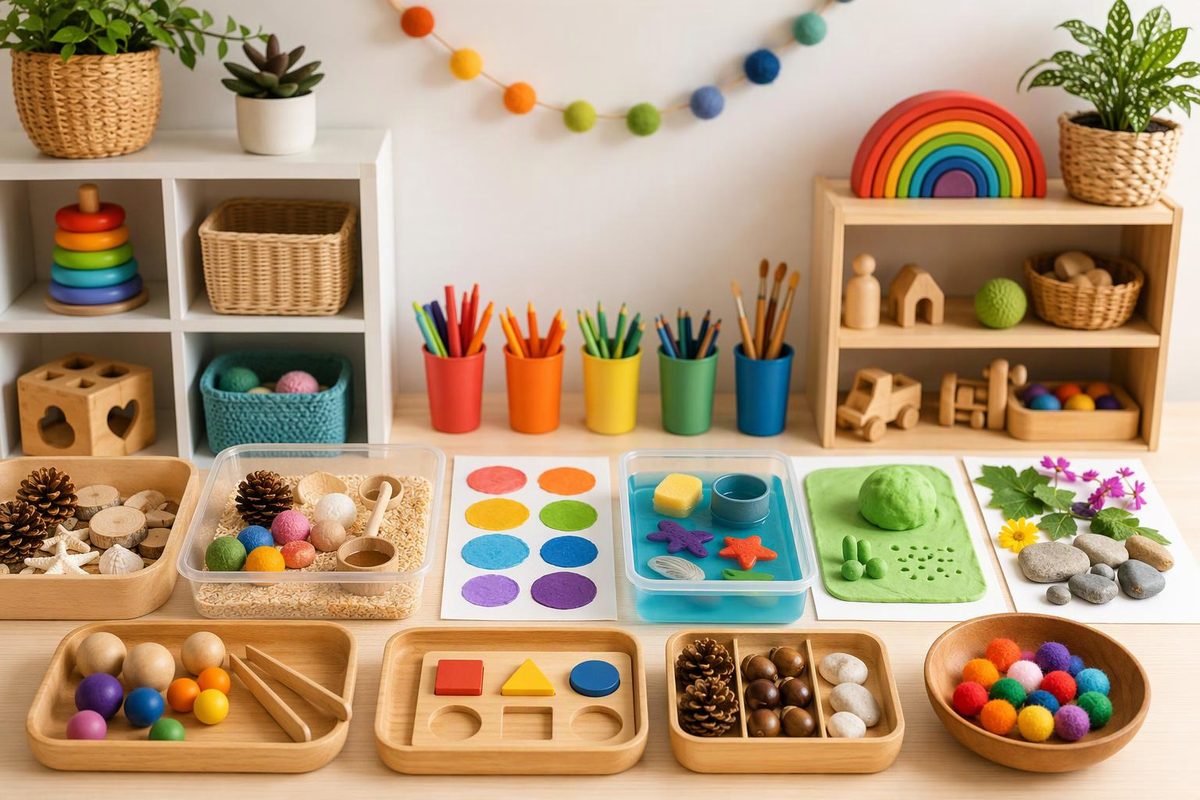
Use these five lesson plans inside the same daily sequence: a familiar greeting, movement, one play invitation, child-chosen play and a simple cleanup job. You can follow the week in order or repeat a day that interests your child.
These are short planning blocks for home or a toddler classroom—not a full-day curriculum or a checklist of skills children must demonstrate. NAEYC’s curriculum guidance emphasizes play, flexible planning and revisiting experiences; for infants and toddlers, relationships, routines and language take center stage.
Set up a repeatable daily sequence
Choose a time when children are comfortable and alert. Keep meals, diapering or toileting, rest and longer indoor or outdoor play in their usual places around the lesson block. Virtual Lab School’s infant–toddler routine guidance recommends focusing on a predictable sequence while adjusting to individual needs, rather than making children fit a fixed clock schedule.
The times below are planning estimates, not attention-span expectations. Shorten, pause or spread the steps across the morning.
| Step | What to do | Flexible time allowance |
|---|---|---|
| Connect | Greet each child by name. Look at a familiar picture-book page together. | 1–3 minutes |
| Move | Offer the day’s movement game. Children can watch or join. | 2–5 minutes |
| Explore | Show one action with the day’s materials, then let children try their own ideas. | 5–10 minutes, or longer while engaged |
| Choose | Leave the invitation available alongside another familiar play option. | Open-ended |
| Close | Give a simple warning, help put materials away and name what comes next. | 1–3 minutes |
For the transition, try: “One more roll, then the ball goes in the basket.” Show the basket as you speak. If a child needs care or becomes distressed, pause the plan and meet that need.
Gather supplies and check safety
For the week, collect:
- A sturdy picture book with familiar objects or animals
- Large toddler blocks and a large, soft toddler-rated ball
- A shallow, smooth-edged basket and clean washcloths
- Large paper and chunky crayons suitable for age two
- A washable doll or stuffed toy with securely attached features, labeled for toddler use
- A large, unbreakable cup suitable for toddler handling
Use intact, age-appropriate materials and supervise throughout. Keep beads, buttons, coins, miniature accessories and other small parts out of these setups. The CPSC’s small-parts guidance identifies small parts—including pieces that break off toys—as choking, aspiration or ingestion hazards for children under three.
Choose crayons labeled nontoxic; Nemours KidsHealth’s toy-safety guidance recommends nontoxic art materials and following toy age labels, which reflect safety rather than a child’s abilities. Remove broken crayon pieces promptly and put crayons away if they go into a mouth. Use a nonslip surface for movement and clear routes of loose toys and furniture edges.
For a group, provide duplicate materials where possible and allow children to play alongside one another. The CDC notes that children this age still need adult help with sharing and conflicts. Avoid making everyone wait through a long round of turns.
Day 1: Put it in, take it out
Learning focus: Hearing action words and practicing grasping and releasing.
Set out: Washcloths beside the basket.
- Connect: Look at one book page. Name something the child notices rather than asking a string of questions.
- Move: Carry a washcloth together to the basket. Say, “We’re carrying it.”
- Explore: Put one cloth in and take it out. Offer another: “Your cloth can go in.” Let children fill, empty or rearrange the basket.
- Choose: Keep the cloth basket available beside familiar blocks.
- Close: Invite each child to put one cloth away. Help with the rest.
Simplify: Offer one cloth and hold the basket steady. Extend: Invite the child to bring a cloth to the doll without requiring a two-step response.
Notice for tomorrow: Did the child prefer carrying, filling or emptying? Keep that action available during the next day’s choice play.
Day 2: Roll and build
Learning focus: Exploring movement, placement and cause and effect.
Set out: The ball in a clear floor area; several blocks nearby but outside the rolling route. Keep towers low and away from other children’s faces.
- Connect: Return to yesterday’s book page. Pause to see what the child remembers or chooses to point out.
- Move: Sit close together and roll the ball gently back and forth. Carrying it back is welcome too.
- Explore: Set the ball aside. Stack two blocks and offer another. Children can build, line up blocks or knock down their own low tower.
- Choose: Offer blocks or yesterday’s cloth basket. Reopen ball play only when the route is clear.
- Close: Put blocks in the basket, then park the ball safely out of the walkway.
Simplify: Start with one block on the floor and one to add. Extend: Make a second low tower beside the first and describe “tall” and “short.”
Notice for tomorrow: Which action drew repeated attempts—rolling, stacking or knocking down? No tower height needs to be achieved.
Day 3: Move, then make marks
Learning focus: Exploring hand movements and describing visible marks.
Set out: Paper on a stable, washable surface with one or two crayons per child.
- Connect: Share a book page and name one picture together.
- Move: While seated or standing comfortably, reach up, lower your hands and tap your knees. Let children choose which movement to copy.
- Explore: Draw one mark on your own paper. Offer the crayons and comment occasionally: “Your line goes across the paper.” There is no shape or letter to trace.
- Choose: Keep drawing available with adult supervision, or offer blocks.
- Close: Collect crayons, put paper aside and help children wash their hands as needed.
Simplify: Hold the paper still and offer one crayon. Extend: Add another color or a larger sheet rather than requiring a recognizable picture.
Notice for tomorrow: Did the child enjoy watching, making dots or sweeping the crayon across the paper? Use that preference when you offer art again.
Day 4: Care for a toy
Learning focus: Exploring pretend actions and familiar care words.
Set out: A doll or stuffed toy, a washcloth blanket and an empty cup.
- Connect: Look for a person or animal in the book. Follow the child’s interest.
- Move: Gently rock your own arms as though holding a baby. Children may imitate without holding a toy.
- Explore: Say, “Bear is sleepy,” and cover the toy. Wait. Follow the child’s idea if they uncover, pat or wake it. Offer the cup for a pretend drink.
- Choose: Leave toy-care play available alongside blocks or the cloth basket.
- Close: Help return the toy and cup to their shelf. Put the cloth in the basket.
Simplify: Offer the toy and model just one action. Extend: Respond to a child’s word with a short phrase: “Drink” can become “Bear wants a drink.” Use familiar care words in the child’s home language too.
Notice for tomorrow: Which pretend action or word would be worth revisiting?
Day 5: Repeat a favorite
Learning focus: Making choices and returning to a familiar experience.
Set out: Two safe options from earlier in the week. Keep ball play separate from table or block play.
- Connect: Let the child choose a page in the familiar book.
- Move: Repeat the week’s preferred movement, or copy a movement the child offers.
- Explore: Show the two play options: “Blocks or bear?” Accept looking, pointing, reaching or words as a choice. Begin with the familiar setup.
- Choose: Let children continue, switch or watch. Add an extension only if they seem interested.
- Close: Give the usual cleanup cue and help return materials. Describe one action you saw: “You covered bear with the cloth.”
Simplify: Offer one favorite setup. Extend: Let the child show you how to join their play.
Notice for next week: Choose one experience to repeat and one small change to try—not five entirely new activities.
Turn observations into the next plan
After each block, write one brief note: what interested the child, what help was useful and what to offer next. For example: “Carried every cloth; basket tipped; use a steadier basket tomorrow.”
These notes guide your setup, not a pass-or-fail assessment. The CDC’s age-two activity suggestions include books, balls, blocks, simple art, pretend play and helping with everyday jobs—the same familiar experiences you can revisit in different combinations.
To replace an invitation without changing the daily structure, choose another from our low-prep activities for 2-year-olds. Keep the greeting, transition cue and cleanup routine familiar while adjusting the materials to the children in front of you.