
4 Letter N Art Activities With Paper, Paint and Crayons
Try four letter N art activities for preschoolers, with clear steps, N sound prompts, simple supplies and easy ways to simplify or extend.
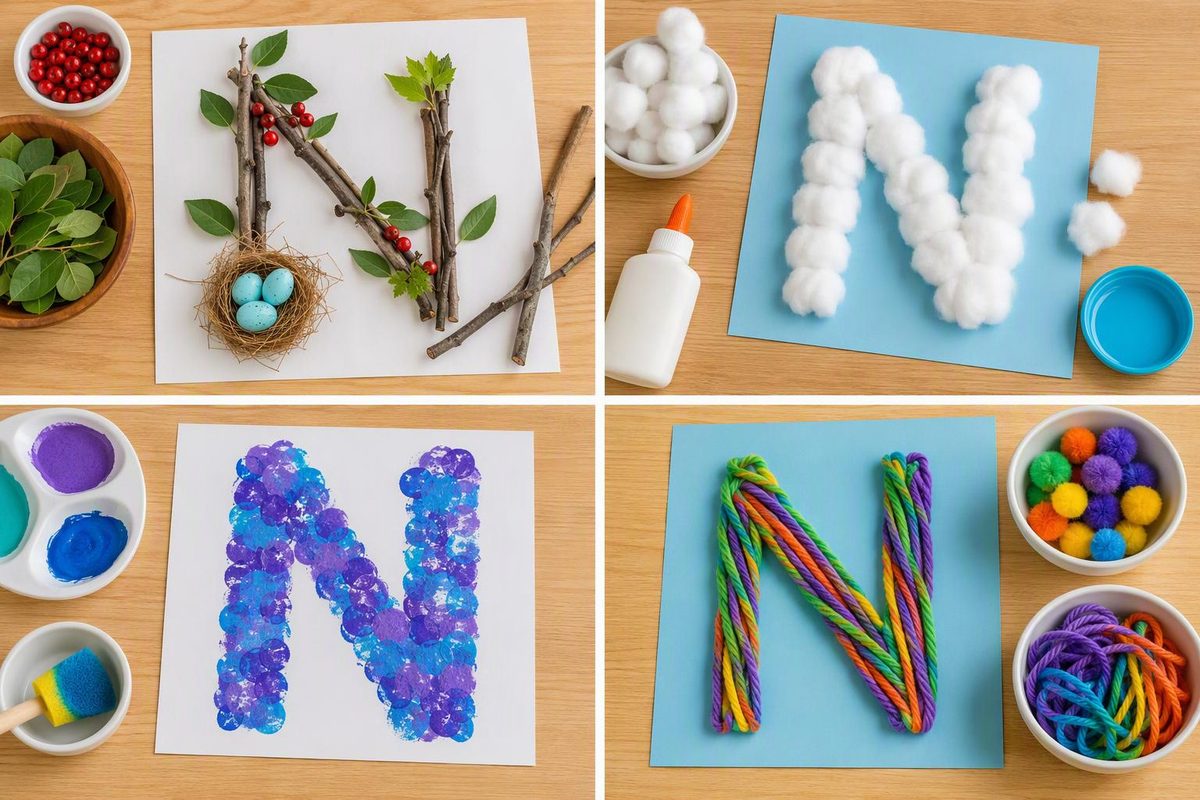
Make a newspaper-covered N, layer a paper nest, paint a night sky or draw a nose portrait. These letter N art activities give preschoolers ages three to five different ways to explore the letter without requiring a worksheet or matching finished pictures.
Choose the newspaper collage for letter-shape practice, the nest for tearing and layering, the night sky for paint exploration, or the portrait for drawing and conversation.
Set out supplies and introduce N
Across the four activities, you’ll use paper, newspaper, crayons, a glue stick, washable watercolor paint and a broad brush. Adults can prepare any cut shapes; children can tear paper instead of using scissors.
Choose art materials labeled for children and their intended use, without cautionary warnings. Supervise closely, keep supplies out of mouths and wash hands afterward. “Non-toxic” does not mean edible; the CPSC’s Art and Craft Safety Guide stresses safe use even with non-toxic products.
Write a large N beside a small n on a card. Say, “These are both the letter N.” Point out that uppercase N has two upright lines joined by a slanting line from the top left to the bottom right; lowercase n has an upright line and a rounded hump.
Then model the beginning sound in nest: “/nnn/, nest.” Keep the sound separate from the letter name “en,” and avoid adding “uh.” The /n/ sound can be stretched, as shown in Reading Universe’s pronunciation guide. Children can listen or point rather than repeat it.
These are letter-themed invitations, not completely unrestricted process art. Still, let children choose colors, arrangements and details. NAEYC’s guidance on process-focused art recommends following children’s ideas and commenting on what you notice rather than expecting copies of a model.
1. Newspaper N collage
Materials: Sturdy paper, newspaper, glue stick and a marker for adult setup.
Setup: Draw a broad, outlined uppercase N that fills most of the page. Select newspaper pages with suitable content.
- Invite the child to tear newspaper into manageable pieces.
- Spread glue over one section of the N at a time.
- Press pieces onto the glue, overlapping them if desired.
- Once finished, look together for the two upright parts and the diagonal connection. If collage has hidden the outline, draw a small N beside it for comparison.
Letter prompt: “Newspaper starts with /n/. You put newspaper on N.”
Skill opportunity: Tearing, placing and pressing paper offer small-hand movements; noticing the three parts keeps letter recognition separate from decoration.
Simplify: Provide torn pieces and help apply glue. There is no need to fill every gap or stay within the outline.
Extend: Offer three broad paper strips to arrange into N before decorating. Use the letter card as a reference, without requiring writing from memory.
2. Torn-paper nest picture
Materials: Background paper, brown or other colored paper, crayons and a glue stick.
Setup: Offer paper that tears easily. Keep a separate N/n card visible so the picture has an explicit letter connection.
- Tear strips and scraps for an imaginary nest.
- Arrange them in a curved pile, leaving a space in the middle if the child wishes.
- Glue the layers onto the background.
- Draw eggs, a bird or another story detail. The nest can also remain empty.
Letter prompt: “This is a nest. Listen to the first sound: /nnn/, nest.” Write nest beneath the picture and point to its first letter.
Skill opportunity: Children can explore layering and placement while describing what their picture holds.
Simplify: Provide broad strips and let the child place them while an adult handles the glue.
Extend: Invite the child to dictate a sentence about the nest. Read the sentence back and look for any N/n letters together.
3. Crayon-and-watercolor night sky
Materials: White paper, white or yellow wax crayons, blue or purple watercolor paint and a broad brush.
Setup: Put out a small amount of water and paint on a protected surface. This uses the wax-crayon resist technique described by the Children’s Museum in Easton: draw firmly with wax crayon, then paint over the drawing with watercolor.
- Draw stars, a moon, swirls or imagined night shapes with crayon. Encourage firm marks, but don’t require recognizable objects.
- Brush a light watercolor wash across the paper.
- Notice where the crayon marks show through and where the paint spreads.
- Let the picture dry. Add an N/n label or write the child’s description beside it.
Letter prompt: “Night begins with /n/. What belongs in your night picture?”
Skill opportunity: Brush movements and observing how two materials behave offer an art exploration alongside vocabulary practice.
Simplify: Use a yellow crayon so marks are visible before painting, and offer just one paint color.
Extend: Divide a spare sheet into two sections: crayon marks on one, bare paper on the other. Invite the child to compare what happens when paint crosses each.
4. N is for nose portraits
Materials: Paper, crayons or washable markers, and an optional child-safe mirror.
Setup: Offer a blank page or draw a large oval if the child wants a starting point.
- Invite the child to draw themselves, someone they know or an imaginary character.
- If using a mirror, look at facial features together without judging their shape or size.
- Add a nose and any other details the child chooses.
- Ask whether they would like you to label the nose. Write nose and point to the n.
Letter prompt: “Nose starts with /n/. Can you point to n in this word?”
Skill opportunity: Drawing offers mark-making practice, while discussing the portrait creates room for descriptive language.
Simplify: Accept a few marks as the portrait. The child can point while you supply the word nose.
Extend: Add labels the child requests, such as eyes or mouth, then find the word that begins with n. Keep this optional rather than turning the picture into a quiz.
For a child who enjoys the art but isn’t ready to identify N, simply name the letter and model one word. For more ways to separate recognition, sound listening and formation, use our guide to choosing preschool letter activities by skill.