
Choose the Right S Activity for Recognition, Sound, or Formation
Choose play-based ideas for finding S, matching S with s, hearing /s/, or exploring formation, with simplify, extend, and safety options.
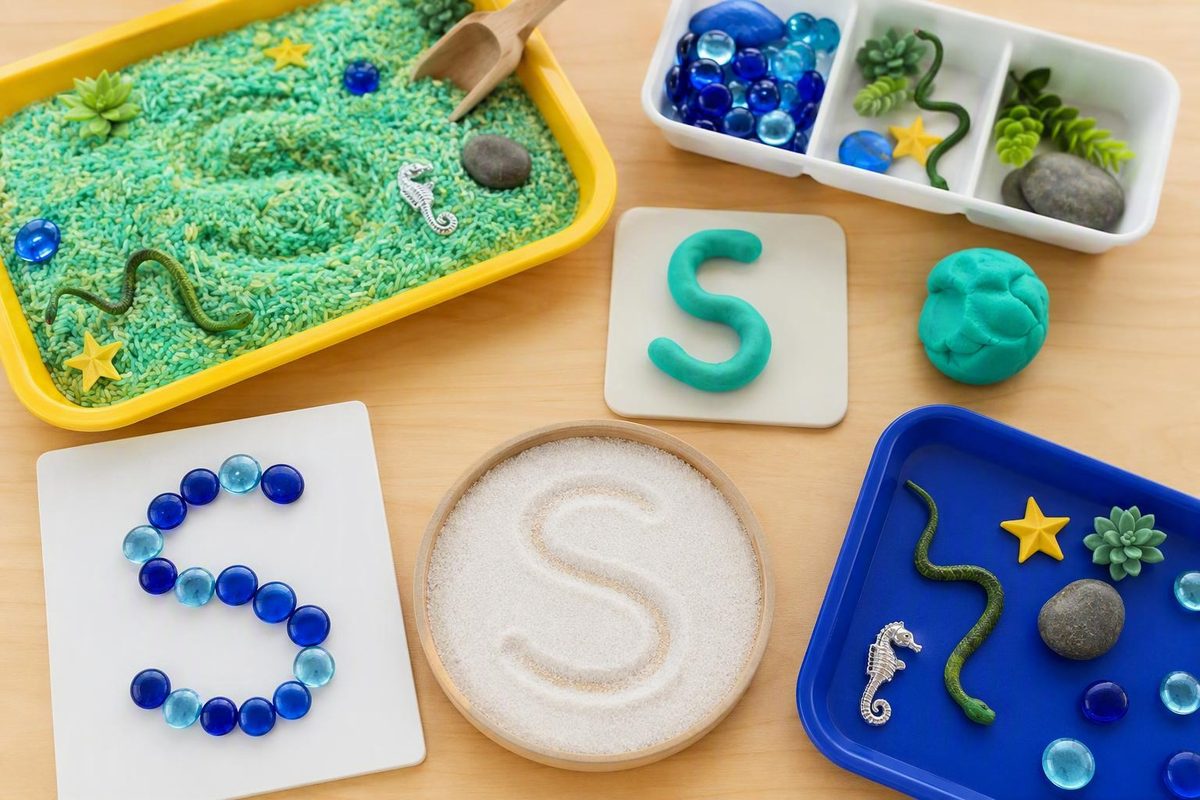
The best Letter S activities for preschool start with one clear action: find S, match uppercase S with lowercase s, hear the common /s/ sound, or explore how S is formed. Choose one primary target, let the child do the literacy work, and adjust the number of choices, model size, or adult support based on what you observe.
Choose a Letter S activity by the skill you want to practice
These 12 activities use play, movement, familiar print, and art rather than relying on worksheets. The setup and mess labels are practical planning categories based on the listed materials—not researched time estimates.
| Activity | Primary target | Planning labels | Format |
|---|---|---|---|
| 1. Letter S hunt | Visual recognition | Quick setup; low mess; no printable; loose parts: yes | Individual or small group |
| 2. Meaningful-print search | Visual recognition | Quick setup; low mess; no printable; loose parts: optional | Individual, small group, or home |
| 3. S and s search-and-match | Uppercase/lowercase matching | Quick setup; low mess; no printable; loose parts: yes | Individual or small group |
| 4. S-versus-T sound sort | Beginning-sound awareness | Involved setup; low mess; no printable required; loose parts: yes | Small group |
| 5. S object basket | Beginning-sound awareness | Quick setup; low mess; no printable; loose parts: yes | Small or whole group |
| 6. Slithering S game | Movement and recognition | Quick setup; low mess; no printable; loose parts: yes | Small or whole group |
| 7. Painter’s-tape S path | Formation and movement | Involved setup; low mess; no printable; loose parts: no | Small or whole group |
| 8. Play-dough S | Formation and fine-motor action | Quick setup; moderate mess; no printable; loose parts: no | Individual or center |
| 9. Tray, paper, or air tracing | Formation or early writing | Quick setup; low or moderate mess; no printable; loose parts: optional | Individual or small group |
| 10. Torn-paper snake collage | Recognition and fine-motor action | Involved setup; moderate mess; no printable; loose parts: yes | Individual or center |
| 11. Spoon-painted S | Recognition and art | Involved setup; moderate mess; no printable; loose parts: no | Individual or center |
| 12. Star or square fill-and-sort | Recognition and fine-motor action | Involved setup; low mess; no printable; loose parts: optional | Individual or center |
Keep three related targets distinct:
- S is the letter’s name.
- Uppercase S and lowercase s are its printed forms.
A concise adult model is: “This is the letter S. In snake, S begins with /s/.” Avoid using the letter name and sound as if they were interchangeable.
Head Start describes alphabet knowledge as recognizing and naming uppercase and lowercase letters and learning that letters are associated with sounds (Head Start on alphabet knowledge and early writing).
Its broad preschool progression moves from experiences such as noticing letters in names and frequently encountered print toward recognizing more letters and producing sounds for many recognized letters. These descriptions are not deadlines, guarantees, diagnostic thresholds, or assessment cutoffs for an individual child (Head Start’s preschool literacy framework).
The sequence here is flexible. You might begin with noticing and matching S, then offer sound sorting or formation. Another child may enjoy making a large S-like mark before consistently matching the two cases. Head Start does not prescribe a fixed Letter S sequence.
Three activities for finding and matching S
1. Letter S hunt
- Target skill: Visual recognition of uppercase S and lowercase s.
- Materials: Hand-drawn S and s cards plus a few contrasting letter cards; container optional.
- Child action: Point to or collect each S from a small set.
- Adult prompt: “Can you find the letter S without me pointing to it?”
- Simplify: Show one uppercase S beside one clearly different letter.
- Extend: Mix uppercase and lowercase forms, using one collection color for S and another for s.
- Observable response: The child finds S among two or three letters before the adult identifies it.
- Setting: Individual or small group.
- Setup/mess: Quick setup; low mess; no printable; loose parts involved.
- Safety substitution: Draw the letters on one large sheet instead of using separate cards.
Repeating “S” after an adult or copying where the adult points does not by itself show independent visual recognition. Change the cards’ positions and ask the child to find S again without a pointing cue.
2. Meaningful-print search
- Target skill: Finding S in familiar, purposeful print.
- Materials: Children’s names, cubby labels, classroom signs, packaging, or a familiar book; removable notes optional.
- Child action: Search for and point to S, or mark each find with a removable note.
- Adult prompt: “Where do you notice S on this label?”
- Simplify: Choose one familiar name or sign with a large, clear S.
- Extend: Search several labels and sort finds into uppercase S and lowercase s.
- Observable response: The child locates S in familiar print without the adult pointing it out first.
- Setting: Individual, small group, classroom transition, or home.
- Setup/mess: Quick setup; low mess; no printable; loose parts optional.
- Safety substitution: Point to letters rather than using stickers or small notes.
Meaningful print connects alphabet practice to print children encounter in daily routines. If a child’s name contains S, begin there; otherwise, use another familiar name, label, sign, package, or book title.
3. Uppercase/lowercase search and match
- Target skill: Matching uppercase S with lowercase s.
- Materials: Hidden hand-drawn S and s notes; large S and s wall cards.
- Child action: Find each note and place it on the corresponding wall card.
- Adult prompt: “You found lowercase s. Which wall card is its match?”
- Simplify: Hide only uppercase S cards and match them to an identical uppercase model.
- Extend: Mix S and s with one or two distractor letters.
- Observable response: The child matches S with s rather than relying only on identical-card matching.
- Setting: Individual or small group.
- Setup/mess: Quick setup; low mess; no printable; loose paper parts involved.
- Safety substitution: Place large cards around a table instead of using small sticky notes.
Matching identical uppercase cards is a useful entry point. Matching S with s asks a different question: whether the child connects the two printed forms.
Three activities for listening for the /s/ sound
Beginning-sound work is a listening task. Finding printed S is a visual task. A child may succeed at one before the other, so observe them separately.
4. S-versus-T sound sort
-
Target skill: Beginning-sound awareness.
-
Child action: Listen to each naturally spoken word and place its picture or object with S or T.
- Adult prompt: “Listen to sock. Does it begin with /s/ or the other sound?”
- Simplify: Offer two clearly different spoken choices and complete each decision together.
- Extend: Add a third initial-sound category or invite the child to suggest another S word.
- Observable response: The child places an item by attending to its spoken beginning rather than copying the previous placement.
- Setting: Small group.
- Setup/mess: Involved setup; low mess; no printable required; loose parts involved.
- Safety substitution: Use large paper pictures instead of small objects.
Say each word naturally. You can sustain /s/ briefly to make the opening sound noticeable, but avoid distorting the whole word. Head Start includes distinguishing words that begin with the same sound within its broader description of preschool phonological awareness.
If repeated sorting becomes confusing, return to naming and finding printed S. That changes the target; it does not turn the activity into a failure.
5. S object basket or show and tell
- Target skill: Connecting a spoken S word with the printed letter.
- Materials: Large S card and objects with familiar intended labels beginning with /s/, such as a sock, spoon, sticker sheet, seashell, or sunglasses.
- Child action: Choose an item, name it, and listen for its beginning sound.
- Adult prompt: “This is S. Spoon begins with /s/. Which item begins like spoon?”
- Simplify: Offer two objects, name both naturally, and make the decision together.
- Extend: Ask the child to suggest another S word or find the printed S afterward.
- Observable response: After hearing the object names, the child identifies or selects the /s/ item without simply copying the adult’s gesture.
- Setting: Small group or circle time.
- Setup/mess: Quick setup; low mess; no printable; loose parts involved.
- Safety substitution: Use large photos or drawings instead of objects.
Choose objects children are likely to label as intended. If a child uses another accurate name—calling a stuffed animal “bear,” for example—acknowledge it and model the S label you planned to discuss rather than treating the child’s answer as incorrect.
6. Slithering S movement game
- Target skill: Movement paired with sound awareness and visual recognition.
- Materials: Large S card and two contrasting letter cards.
- Child action: Move like a snake while sustaining /s/, stop, and locate S among the displayed letters.
- Adult prompt: “Slither with /s/. Stop—now point to the letter S.”
- Simplify: Display S beside one very different letter.
- Extend: Show uppercase and lowercase forms, then ask for a specific one.
- Observable response: The child locates S after moving without following another child’s point.
- Setting: Small or whole group.
- Setup/mess: Quick setup; low mess; no printable; loose cards involved.
- Safety substitution: Make a seated hand “snake” if floor movement is unsuitable.
Rhyme and alliteration can also provide opportunities to listen to spoken language. Keep claims modest: these games provide practice with specific actions, not guaranteed reading outcomes.
Three large-to-small ways to explore the shape of S
Head Start describes early writing as progressing from marks and scribbles toward drawing and eventual letter formation. That broad progression supports offering several ways to explore a letter’s form without expecting every preschooler to write it independently.
These options are invitations, not prerequisites children must complete in order.
7. Painter’s-tape floor path
- Target skill: Exploring the S curve through large movement.
- Materials: Painter’s tape and an S card.
- Child action: Walk, tiptoe, or hop along a large taped S, then find the matching card.
- Adult prompt: “Follow the curve. Which card matches the path?”
- Simplify: Walk slowly beside the child or use a wider path.
- Extend: Ask the child to trace the shape in the air after walking it.
- Observable response: The child follows the general S curve or distinguishes S from another letter afterward.
- Setting: Small or whole group.
- Setup/mess: Involved setup; low mess; no printable; no loose parts.
- Safety substitution: Draw a large S on paper for finger walking when a floor path is unsuitable.
Place the path away from obstacles and crowded routes. Check the tape manufacturer’s directions before applying it to a particular floor, and stop using the path if the tape lifts or the surface becomes unsuitable.
8. Play-dough S
- Target skill: Building the uppercase or lowercase form.
- Materials: Play dough and a large hand-drawn S model.
- Child action: Roll one long strand and curve it over the model.
- Adult prompt: “Can you curve your strand along the S?”
- Simplify: Leave the model visible and help position the ends without moving the child’s hands through the entire task.
- Extend: Remove the model or form both S and s.
- Observable response: The child attempts the general curve without the adult forming it for them.
- Setting: Individual or center.
- Setup/mess: Quick setup; moderate mess; no printable; no loose parts.
- Safety substitution: Use a thick paper strip that can be curved over the model.
9. Tray, paper, or air tracing
- Target skill: Formation exploration or early writing.
- Materials: A shallow rimmed tray and a filler suitable for the child and setting, used with a finger or brush; alternatives include paper, crayon, a dry-erase surface, or open air.
- Child action: Trace or attempt a large S.
- Adult prompt: “Start here and make the S curve in your own way.”
- Simplify: Keep a bold model beside or beneath the tracing surface.
- Extend: Remove the model and invite an independent S-like form.
- Observable response: The child follows the general curve or attempts the form without the adult moving their hand.
- Setting: Individual or small group.
- Setup/mess: Quick setup; low mess without filler or moderate mess with filler; no printable; loose parts optional.
- Safety substitution: Use paper, dry-erase tracing, or air writing instead of salt, sand, or another sensory material.
Three child-led Letter S art and center ideas
A polished craft is not the goal. The useful literacy action is what the child does: finding the S, filling its outline, connecting an S word with /s/, or identifying the finished letter among alternatives.
10. Torn-paper snake collage
- Target skill: Visual recognition with child-led filling and tearing.
- Materials: Large hand-drawn S, paper, glue, and marker.
- Steps: Let the child tear paper, fill the S outline, and draw eyes.
- Adult language: “Find the S shape. Snake begins with /s/.”
- Simplify: Offer larger paper pieces and a thicker outline.
- Extend: Add a separate lowercase s collage.
- Observable response: The child points to or fills the S rather than decorating only around it.
- Setting: Individual or center.
- Setup/mess: Involved setup; moderate mess; no printable; loose paper parts involved.
- Substitution: Draw eyes instead of using small googly eyes.
11. Spoon-painted S
- Target skill: Recognizing S while experimenting with an art tool.
- Materials: Thick S outline, washable paint, spoon, and a protected work surface.
- Steps: Let the child stamp or spread paint within the outline. When finished, place the page beside another letter.
- Adult language: “You painted S. Which page shows S?”
- Simplify: Use one paint color and a very wide outline.
- Extend: Compare the painted S with lowercase s or ask the child to air-write the shape.
- Observable response: The child identifies the painted S when it is shown beside another letter.
- Setting: Individual or center.
- Setup/mess: Involved setup; moderate mess; no printable; no small loose parts.
- Substitution: Use crayons or dot marks instead of paint.
Keep the recognition check separate from experimenting with the spoon. Enjoying or using the tool does not necessarily show that the child recognizes S.
12. Paper-star or square fill and sort
- Target skill: Visual recognition and filling the S form.
- Materials: Large S outline; large paper stars or squares; glue optional.
- Steps: Ask the child to identify S, then fill it with the paper shapes.
- Adult language: “First, show me S. Now you can fill its shape.”
- Simplify: Use a few large shapes without glue.
- Extend: After identifying S, sort the pieces by color or size, or add a lowercase s.
- Observable response: The child identifies the S before beginning optional sorting or counting.
- Setting: Individual or center.
- Setup/mess: Involved setup; low mess; no printable; loose parts optional.
- Substitution: Draw stars or squares inside the outline instead of using loose pieces.
Counting, color, shape, and sorting prompts can follow the Letter S task, but they should not obscure it. Likewise, an adult cutting an elaborate snake or star does not offer the same literacy opportunity as the child finding, matching, filling, or tracing S.
A flexible five-day Letter S plan
This schedule is a convenient example, not an evidence-based optimal frequency or a required letter-of-the-week program. Choose one or two short experiences per day according to the group’s interest and routine; available guidance does not establish an ideal number of activities, repetitions, or days.
Day 1: Notice and move
- Model: “This is the letter S. In snake, S begins with /s/.”
- Search for S in children’s names, labels, and familiar print.
- Finish with the painter’s-tape floor path.
Day 2: Collage and shared reading
- Make the torn-paper snake collage.
- During a familiar book, notice visible S in the title or selected print.
- Possible titles include The Very Busy Spider, The Snowy Day, Silly Sally, and Snowmen at Night (documented Letter S read-aloud list). Choose for your group and preview the text rather than assuming any title has a particular concentration of /s/, rhyme, or alliteration.
Day 3: Match and paint
- Conduct the uppercase/lowercase search-and-match game.
- Offer spoon painting or another child-led S-outline center.
Day 4: Explore formation
- Choose play dough, tray tracing, paper tracing, or air writing.
- Repeat a recognition activity that previously held the child’s interest.
Day 5: Listen and revisit
- Try an S-versus-T beginning-sound sort.
- Let children revisit one selected activity.
- Make a brief note about what each child did without prompting.
Match the activity to the setting: use circle time for sound modeling and movement, centers for matching and collage, small groups for sound sorting, and home routines for searching familiar packaging, names, and books.
Adapt the challenge, observe the response, and check the materials
Use readiness, not a rigid age label, to adjust the task. Head Start’s age-band progressions are broad descriptions: earlier experiences may include letters in names and frequently encountered print, while later preschool experiences may include recognizing more letters and producing sounds for many recognized letters. They are not guarantees, diagnostic thresholds, or deadlines (Head Start’s preschool literacy progression).
Simplification ladder
- Reduce the display to two letter choices.
- Show only uppercase S or only lowercase s.
- Provide a large, bold model.
- Let the child point instead of forming the letter.
- Complete the task alongside the child.
Extension ladder
- Match uppercase S with lowercase s.
- Find S in meaningful print.
- Sort words that begin with /s/ from words that begin with another sound.
- Remove the formation model.
- Invite an independent S-like form.
Use informal notes rather than scores. You might record whether the child:
- finds S among two or three letters;
- matches S with s;
- notices S in a name or label;
- identifies an S word by its beginning sound;
- follows the S curve with a large movement; or
- attempts an S-like mark independently.
Each response reflects one task, not overall alphabet mastery. A child may hear /s/ in sun but not yet match S with s, or may copy the curve without independently finding S.
Review every activity’s materials before presenting them. Scissors, paint, salt, sand, dough, sensory fillers, tongs, stickers, small craft pieces, and rough craft-stick edges call for individual suitability decisions and close adult supervision. One published Letter S craft collection likewise presents its activities as requiring adult supervision and specifically flags rough craft-stick edges (ABCmouse Letter S crafts and activities). Follow your program’s rules and the product manufacturer’s directions; no material or substitute is appropriate for every preschooler.
Depending on the child and setting, substitutions may include:
- drawn eyes instead of googly eyes;
- torn paper instead of beans, beads, pom-poms, or mini erasers;
- paper, dry-erase, or air tracing instead of salt, sand, slime, shaving cream, or fake snow;
- large paper pictures instead of small sound-sorting objects.
These substitutions reduce reliance on particular materials, but they are not universal safety guarantees. Adults still need to consider how an individual child uses materials and supervise accordingly.
Keep the main Letter S plan food-free. If you independently add an S snack, check allergies, dietary restrictions, hygiene, choking concerns, and classroom policy. Total Preschool’s published activity guidance also advises keeping food-based preschool activities allergy-aware (food-activity planning guidance). Do not assume that one food is suitable for every child.
Choose one clear target—find S, match S and s, hear /s/, or explore the letter’s shape—then select a child-led activity and adapt the challenge. The most useful observation is not whether the finished craft looks polished, but what the child can find, match, hear, or attempt with less adult prompting.